Saturday, September 30, 2006

Citrus

"Citrus", 1999-2001 (colorprints 126 x 126 cm. / 80 x 80 cm.) edition of 5

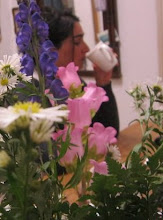
In this particular photography by Roi Kuper, i see so strongly colors - even absent from the photo, i see it so strongly, like a imprinted in memory too deep to be erased. especially the yellows -the color of the groundsel...and this field bursting with fiery sun, the citrus trees - fighting to survive this heat and ocean of wild flowers that about to cover them, the vivid movements of this little humble flowers, makes me want to feel the same wind that caresses it- this moment captured here, this view makes me feel in all my senses ...i keep on coming back to this amazing photography that is only one from an outstanding magnificent series - "Citrus"

and this lonely citrus, half dry, half alive, with it's naked delicate branch reminds me of the thorns of both the biblical unidentified bush, and the crown of Christ. a symbol for ending entwine with beginnings and promises for a renewal.

Friday, September 29, 2006

The Naked City - Map Portraits

'Unlike what most people think psychogeography is really very simple: the moment you first step into a room you immediately, without conscious effort, have a heartfelt opinion about it. Psychogeography is the study of the 'stuff' that causes this mental reaction and the psychological and behavioural effects that are evoked by it.' more

Brian Collier Movement Patterns: Human Life as a Series of Lines map-portraits 'Tracking an individual's regular movements can be both uncomfortably intimate and frigidly anonymous. In this project I create a series of map-portraits based on several individual people habitual weekly travels. These maps are intended as the sole description of each subject's life, paring away any additional events or behaviors.'

'The presentation of these map-portraits intentionally suggests a cold, removed observer studying an anonymous subject. This appearance of scientific objectivity works in direct opposition to the fact that I personally know all the individuals represented. Furthermore, the initial maps were made by those individuals themselves rather than an outside observer. There is an underlying intimacy, evoked only subtly, when the viewer notices the flesh-like quality of the hand-waxed paper or the use of only first names of participants.'

"One of the issues that inspired this project is the contemporary paradox of feeling both invisible and overly visible: the ever-increasing anonymity of an individual meets the ever-increasing exposure of his or her life in environments affected by high-technology tracking, surveillance, and profiling. The more information that an organization has about an individual, the more likely it is that he or she will be reinvented and renamed as a number in a database. Government agencies and businesses have developed ways to categorize and classify an individual based on data collected from a variety of sources. ."

"..From an aesthetic perspective one may consider the movement lines on the maps as representing large-scale process drawings made unconsciously by the body of each person as he or she moves through a local environment. These drawings, arguably made by people everywhere as they move through space, remain unrealized unless monitored and documented.. "

"...The issue of tracking movements has taken on new implications in the era of "The War on Terrorism." The recent increase in surveillance and the new powers given to the government to monitor citizens lives create questions about the limits of freedom and privacy. In news debates and private life, people commonly worry that their lives may be "invaded." During the creation of this work, in fact, several participants expressed discomfort, saying that the collection of data about their movements felt intrusive."

***

During the last weekend of Marchs the first session of the 'Hot Summer of Psychogeography' (2002) took place in Amsterdam. Socialfiction, the organisers, sent participants on their way from Dam Square with an algorithmic description of the route. The same experiment was repeated later in the day in the Bijlmer district.

Dérive through Utrecht

read this as well

Situationist Guy Debord devised the notion of psychogeography in the 1950s. It deals with the study of the exact laws and specific effects of our geographic environment. Psychogeography describes the sudden change in atmosphere a few metres further along a street, and the different characteristics of city districts. It reveals the path of least resistance a person subconsciously takes when wandering aimlessly and points out the attraction or repulsion of particular places. One of Situationism's practices is the dérive (literally: wandering or drifting), a technique of rapid passage through varied environments. Involving playful-constructive behaviour, dérive examines psychogeographical effects and is thus quite different from the classic notions of journey and routing. Dérives weren't random; they challenged the psychogeographer to use his powers of imagination to experience the urban environment anew - for example, by following scents or negotiating a route through Paris armed with a map of London. What propelled these strollers was not so much curiosity but political and theoretical motivations>>>

***

Imagine if you were walking in an unfamiliar area of town and suddenly you realized that it was very dark and the shadows looked distinctly unfriendly. But what if you had a map, a map that clearly marked out entire sections of the city as safe, or peaceful or even scary. Such a map would be dramatically different from normal maps, in that the data being presented is no longer merely objective, but also subjective. Welcome to the new world of psychogeography. Psychogeography is an umbrella term used to refer to a number of different ways to explore cities and towns. This new field is still emerging and like any new genre there is still a sense of uncertainty. Most definitions hover around the issues of maps and people’s responses to urban spaces and surroundings. The most accessible one is as follows: Psychogeography is the hidden landscape of atmospheres, histories, actions and characters which charge environments. But there is a basic thread running through all the various versions of psychogeography, and that is the generation of maps. These are maps that challenge all preconceived notions about maps. Psychogeographic maps presenting maps that may or may not be objective. A case in point is 'mental mapping'. These are maps generated by individuals walking along areas in the city and recording emotions. The resulting map is more than a physical record of distances travelled, it is also a record of the internal state of mind of the map maker. Other kinds of mental maps include maps made from memory alone. Some maps even overlay several such mental maps and the final result is a unique perspective of hitherto familiar areas. The newness of this field also leads to widely differing methods of map making. By far the most commonly used method is something known as "Generative algorithms". This involves the establishing of a predetermined method of walking, and the psychogeographers follow such algorithms in order to explore the city in new ways. Typically, the rules for walking would involve just a series of instructions such as turn right, and then the second left, etc etc, and soon the participants would end up in places they would never have consciously chosen to go to. Another example of this new way of walking is using a map of, say, City A, and follow it in City B. Or by randomly following a person on the street and observing the route he/ she takes. While these projects seem to push the boundaries of maps further, one is tempted to ask what use is it all? For this we have to wait and see. But for sure, the city will no longer be something that lies in-between their houses and offices, instead there is likely to be a renewed interest in the concept of being an urban dweller. Dinesh Rao

Thursday, September 28, 2006

PRECESSION OF SIMULACRA

If we were able to take as the finest allegory of simulation the Borges tale where the cartographers of the Empire draw up a map so detailed that it ends up exactly covering the territory then this fable has come full circle for us, and now has nothing but the discrete charm of second-order simulacra.

Abstraction today is no longer that of the map, the double, the mirror or the concept. Simulation is no longer that of a territory, a referential being or substance. It is the generation of models of a real without origin or reality: a hyperreal. The territory no longer precedes the map, nor survives It is the map that precedes the territory PRECESSION OF SIMULACRA — it is the map that engenders the territory and if we were to revive the fable today, it would be the territory whose shreds are slowly rotting across the map. It is the real, and not the map, whose vestiges subsist here and there, in the deserts which are no longer those of the Empire but our own: The desert of the real itself.

Jean Baudrillard, "The Precession of Simulacra" via radicalcartography

aleksandra mir - Naming Tokyo

Wednesday, September 27, 2006

Voyage around my Room

A book I would love to read one of these days. (learnd about it at shamash)

by Xavier de Maistre

Here is The complete review's Review:

In 1790 Xavier de Maistre was punished for having gotten into a duel by being put under house arrest for forty-two days. De Maistre took advantage of his sequestration, finding within his own four walls a wealth of material to dwell on. His short book, Voyage around my Room, recounts his expeditions during that time. It is a travel book like no other.

De Maistre suffered few hardships: he had his faithful servant tending to his daily needs, and his dog, Rosine, is a stalwart companion. Physically de Maistre could not roam far and so most of the travels were, indeed, leaps of the imagination -- but he did find a surprising amount of material in his fairly comfortable room. He slowly leads the reader around it, describing the pictures on the walls, the vistas and prospects within and beyond the room, exploring and dwelling on objects that are otherwise taken for granted. And what he see brings back memories, focusses ideas, leads him to look at things anew. De Maistre proceeds at a leisurely pace -- and is disappointed (as is the reader) at how soon the allotted time is up, knowing that in the outside world everyday life will not permit such fine contemplation. The room is "that enchanted realm containing all the wealth and riches of the world", revealed and revelled in when he has the time and peace to dwell on it. From the pleasures of waking or the contemplation of ancient myths, de Maistre describes his journeys -- his flights of fancy -- .

Tuesday, September 26, 2006

First Light

James Turrell, First Light, Prints,

A Shrug of the Shoulders

Fernando Pessoa A Shrug of the Shoulders We generally give to our ideas about the unknown the color of our notions about what we do know: If we call death a sleep it's because it has the appearance of sleep; if we call death a new life, it's because it seems different from life. We build our beliefs and hopes out of these small misunderstandings with reality and live off husks of bread we call cakes, the way poor children play at being happy.But that's how all life is; at least that's how the particular way of life generally known as civilization is. Civilization consists in giving an innapropriate name to something and then dreaming what results from that. And in fact the false name and the true dream do create a new reality. The object really does become other, because we have made it so. We manufacture realities. We use the raw materials we always used but the form lent it by art effectively prevents it from remaining the same. A table made out of pinewood is a pinetree but it is also a table. We sit down at the table not at the pinetree. ... An excerpt from "The Book of Disquiet," written in the 1920's, first published in 1982 by Atica in Lisbon. via artseensoho

Sunday, September 24, 2006

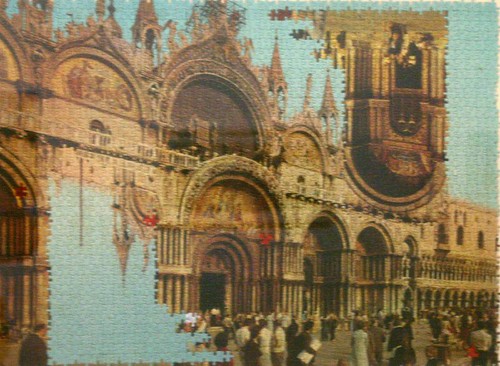
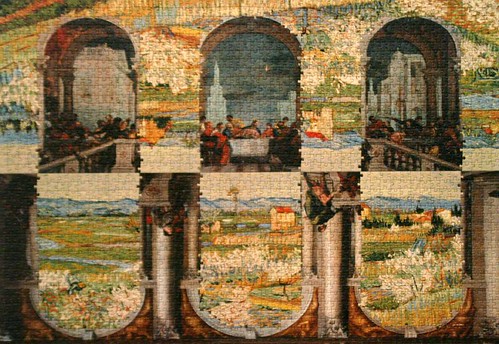
Puzzeled

yuval peled

Thursday, September 21, 2006

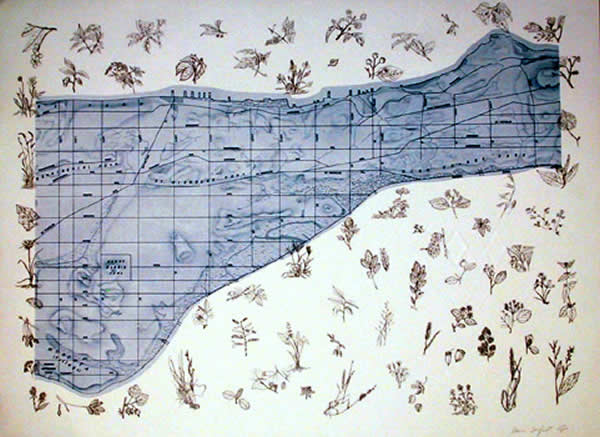
New York City's Parks (map)

Alan Sonfist. New York City's Parks 3 (Map)

Alan Sonfist. New York City's Parks 2 (Map)

Wednesday, September 20, 2006

Flâneur

"the vague feeling is the pleasure of walking aimlessly through the streets of New York; the seemingly causeless delight in strolling about with no destination and no hurry, just looking at things, letting myself wander, getting ideas. In the increasingly rare instances I find myself actually doing it I invariably think, “I wish I could just do this all the time, every day.” In truth, and I’ve never really known why, It just makes me happy. Wandering the streets, facelessly weaving through the throngs, feels so natural and comfortable that I’d never even wondered whether there was a word for it. . . I just discovered yesterday there is a word for this perfect activity: flanerie. Had I only known as a child I might have answered all the insistent adult inquiries of “what do you want to be when you grow up?” quite differently and said “I will be a Flâneur!” via The Nonist

Tad Lauritzen Wright Beautiful Landscape 2005 six-color lithograph

Stars music

Stars is a work that reflects upon the intersection of gender and the history of science. The sound installation transforms astronomical data, digitally imaged on to 12" vinyl LPs, into unique tonal compositions reminiscent of radio astronomy recordings of pulsars. The strange yet somehow familiar music mediates the relationship of the data to the history of its production, as each LP contains the full-hemisphere astronomical data for the birth or death of one of several women members of the Harvard College Observatory, collectively known as "The Harvard Computers."

Real DJs Code Live

A new brand of music maestro is turning programming into performance, eschewing turntables for a compiler and a mind for syntax structure. "Livecoding" practitioners improvise using Perl or homemade programming architectures to build compositions from the ground up, replacing instruments and samples with raw code authoring before a live audience. >>

Cédric Tanguy for PRÉFÉRENCES mag. David Guetta I From the series "Ghost Stars" or "Les barockeurs de diamants"

New York, September 11, 2001, Four Days Later…

On September 15, 2001, the high-resolution sensors of the Ikonos satellite passed over lower Manhattan, collecting data. For an exhibition on the “rhetorics of surveillance” at the Zentrum für Kunst und Medien in Karlsruhe, this installation asked about the relation between catastrophe and memory, suffering and exposure, information and experience, by printing the satellite image across 102 square meters of the gallery’s floor.

Click for project

Monday, September 18, 2006

home made universe

Jeroen Diepenmaat

pour des dents d'un blanc éclatant et saines (2005) stuffed birds play records by putting their bill into the groove (with help from Hans Diepenmaat)

xxxxxxxxxxxxx home made universe (2003) taperecorders are connected to eachother through audioloops and play the tunes on different circuits. via we-make-money-not-art

Sunday, September 17, 2006

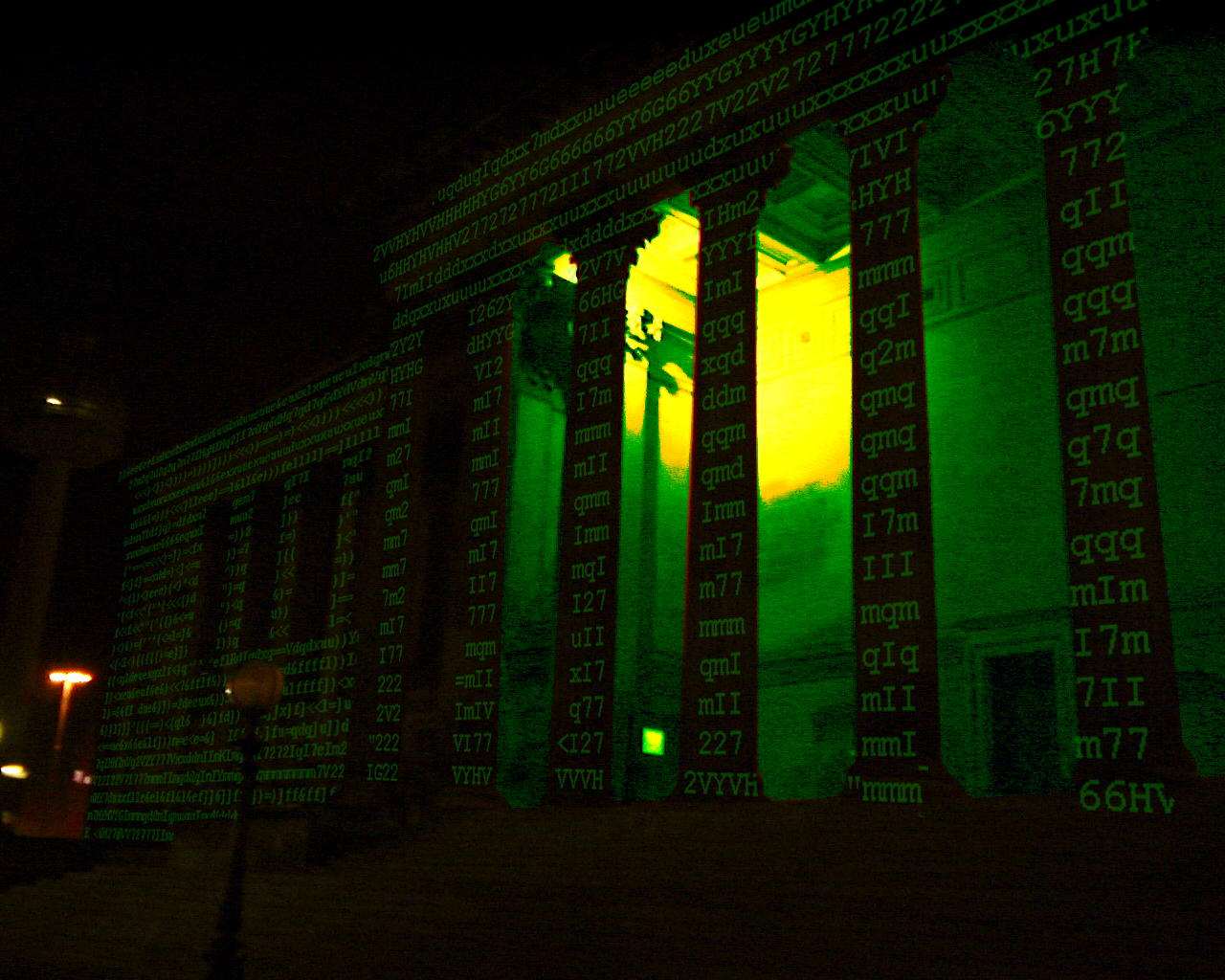
ASCII architecture

St George Hall, Liverpool, Designed by Harvey Lonsdale Elmes at the age of 23 is one of the finest neo-classical building in Europe:

The project consists in fully covering the St. Georges Hall with the projection of ascii rendering of the same surface that it's being projected on.

Wednesday, September 13, 2006

Blattschnitte

Natalie Czech, uses vertical aerial photographs that are freely available on the Internet and combines them by multiple superimposition. she concentrates on industrial and railway facilities whose linearity lends itself to suchlike montage.

From the serie: Blattschnitte

Blattschnitte 28, 2005, 80 x 60 cm

Blattschnitte 30, 2005, 146 x 108 cm

Blattschnitte 17, 2004146 x 100 cm

Blattschnitte 06, 2003120 x 80 cm via

Monday, September 11, 2006

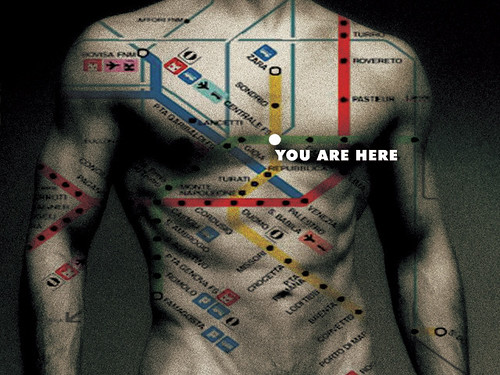
Mapping Your Future

I have found this at the divorce support at About site. but i find it an interesting game for every one At This Moment, You Are HERE

Most major shopping malls have locator maps at various spots, a red "X" with an arrow pointing to it and the words "You Are Here" so that you can see how close or how far you are to the place you really want to be. Similar maps can be found at highway rest stops to show travelers where they've been and the distance and roads to their destinations.

The difference between those maps and the map of your life is that the "future" is fixed on those maps; the towns ahead will not move or disappear, the stores in the mall will be there when you get there. Life is certainly not that predictable but what we both know is that right now, this minute, YOU ARE HERE.

photo: Created by Anton Leroy.

get some paper - it can be one of those long rolls of banner paper for a printer or a ring binder or journal - and a box of crayons or felt tip markers in different colors.

Make a big red "X" for right now on your paper or in your journal, leaving room to the left of the "X" for your history.

Now, starting at the left or "history" side of your "X" put in significant dates and events as far back as you can remember and as few or as many as you wish. Put the good events on "peaks" and the bad events in "valleys" and you'll no doubt have quite a few events that just happened and you don't consider them peaks or valleys.

For those of you who want to get extremely creative, paste photographs for different events or use other graphics for illustration (such as a baby's crib for the birth of your child, etc.). You don't have to hit every significant spot because you can always come back and add more later.

Putting "What If's" Into Your Life's Journey

Putting peaks and valleys in your future will be more difficult. Your life right now may be in a valley. Here's where you will project some "what if's" for the next few years. For example, what will happen in your life journey if something you're dealing with right now goes through the way you want it to, and what will happen if it doesn't?

You have two possible paths you'll travel as a result of that one event. Maybe you have some goals such as going back to college, or starting a new career, or finding a new love, or leaving an abusive husband, or confronting your wife about a suspected affair, so start there.

"What if" you graduate from college?

"What if" you start your own business or change careers or get a new job? "What if" you find a new love?

"What if" you leave your husband?

"What if" you confront your wife?

"What if" you do nothing?

Using this method, think about your future in steps. What you project for your future is only your best guess based upon your life up to now and your the goals and dreams you wish for yourself. You already know that your best plans will change despite your work to keep them together.

Reviewing and Revising Life's Peaks and Valleys

Once you have completed your "I am here" map, put it somewhere that you can look at it occasionally and amend it as your future becomes present and then history. You might be surprised at what you see.

Much like making a list of the good and bad of your life and your relationships, mapping out your peaks and valleys up to now and then into the future will give you new insight into what you have, what you want, where you've been and where you're going.

Your life's map will also help to remind you that what you have and where you've been will always be influenced by what you want and where you're going.

Sunday, September 10, 2006

Forming a Thought

by Nita L. Sturiale

Nature is a continuous transformation of energy, from galactic motion to starlight to tree to seasonal cycles to human to idea. Though genes and culture are intimately linked the rate at which they each evolve is different. Though culture changes very quickly it is limited by the inherent abilities of brains. The interaction between individual brains and cultural information is a dynamic system of transformation and change. This continuous system moves with wavelike patterns.

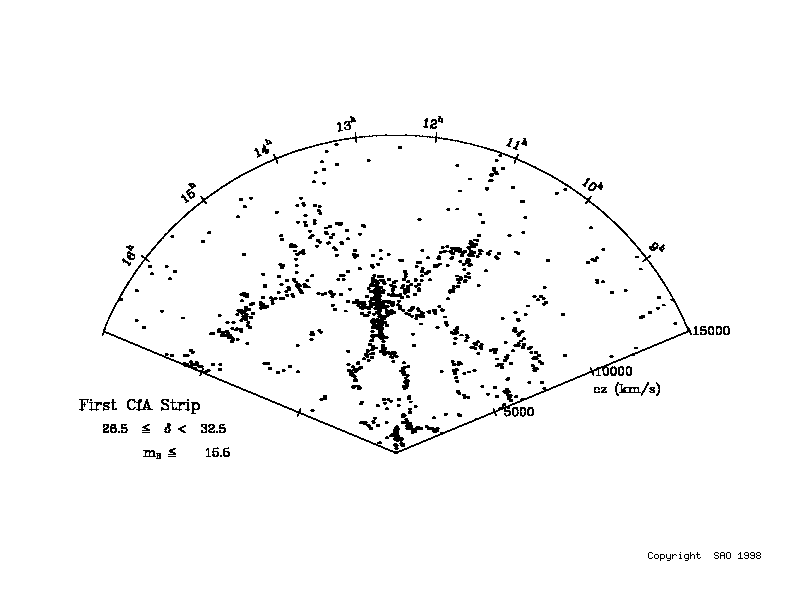
/\ Slice from large-scale map of known Universe by M. Geller and J. Huchra - dots indicate galaxies.

Every organism is a living map of time and interaction in nature.

Every artwork and sciencework is a physical record of memories, ideas and information. They are also maps of the human brain.

Anything that records an interaction, the movement of one thing through another, can be considered a map.

The neuronal connections that represent the growth and learning one has experienced throughout life, a series of stroboscopic photographs of a milk drop falling through air, the path of ones footsteps through a park, each is a map of interaction. As the cut marks of a figure skater's path through ice store information about the speed, direction and weight of the body, a map stores information about its creator.

Maps are the external storage of memories. These external databases enable an organism to compare past and distant events with present ones. In the case of land maps, users can locate where they are now, where they have been and where they might want to go. Brain maps can be images of the physical structures of the brain as well as show complicated interconnections of an individual brain's neuronal pathways>>

Saturday, September 09, 2006

Voluntaries

Part of a series of 23 installations. Each piece contains 1,000 blocks. of Artist John Powers

Part of a series of 23 installations. Each piece contains 1,000 blocks. of Artist John Powers

via

X-Ray Sound Recordings

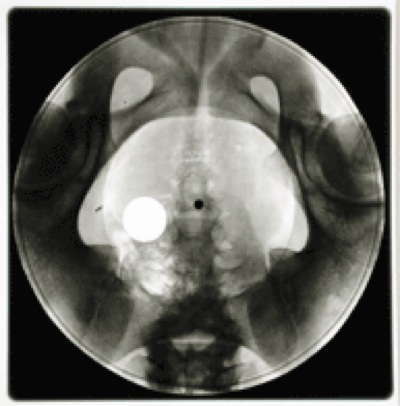
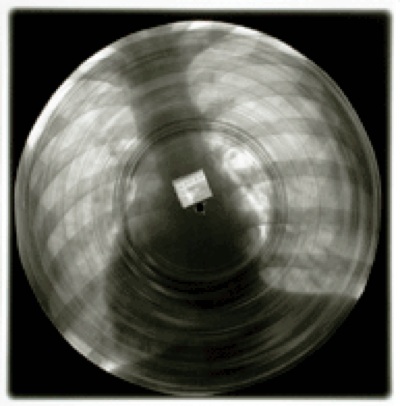
by Kevin Kelly In the USSR and Eastern Europe in the 1950s underground night spots would play music pirated from the west. The only media they had were recorders etched into discarded X-ray film...the method became so widespread in Hungary that not only amateurs, but the Hungarian Radio made sound recordings on such recycled X-ray films. I find thesealso interesting from the visual aspect...

József Hajdú, collected and posted these images. Here's what he says about them: "I felt that those X-ray record albums relate to our contemporary lives in many ways, especially when considering such terms as 'multimedia' or 'recycling'. I copied the X-ray films with their engraved sound-grooves on photosensitive paper and made enlargements of certain details."

read more via spaceandculture

Thursday, September 07, 2006

African maternity figures

http://www.randafricanart.com/African_maternity_figures_various_people.html GRAVE STELE WITH MOTHER AND CHILD Musurongo group, Kongo peoples, Angola, 19th century Steatite, H. 46 1/2 in. (118.1 cm)

Weight of God

Weight of God began as a conversation between Nita Sturiale and Jane D. Marsching via an exchange of URLs over the course of three months in 2005. The conversation began with the intention of answering the questions what is the relationship betwen the brain and God? The conversation's URLs were mapped in a basic UML program and then translated into a physical installation in which viewers could press large fuzzy buttons connected to the computer via a pic chip that would prompt the computer to load the website on the screen. The chalk and wire drawing attempts to visualize the conversation in nodes organized in 3 levels, with the top level containing the primary nodes: brain/god, lives, natural phenomena, and mapping.

Monday, September 04, 2006

The fascination of maps

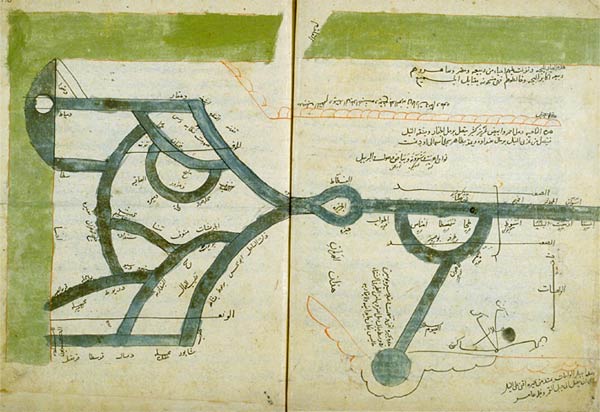
"The fascination of maps as humanly created documents is found not merely in the extent to which they are objective or accurate. It also lies in their inherent ambivalence and in our ability to tease out new meanings, hidden agendas, and contrasting world views from between the lines on the image"
J. B. Harley

Les sources du Nil, Ibn Hawqal, Manuel de géographie. Fin Xe siècle. Copie du XVIe siècle d'après un manuscrit de 1443-1444

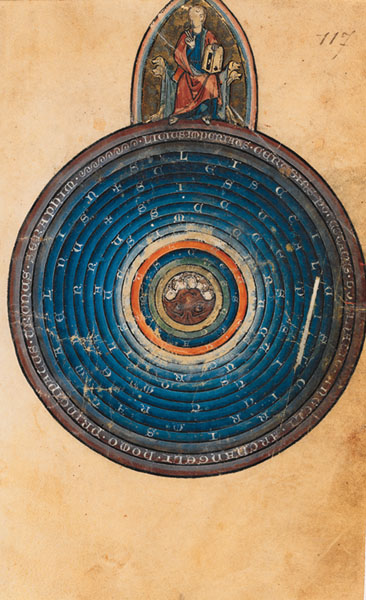
La Terre au centre des sphères de l'univers, Gossuin de Metz, L'Image du monde de. Copie du XIIIe siècle

Sunday, September 03, 2006

seven maps

When filmmaker/videoblogger Daniel Liss challenged himself to make 7 videos in 7 days, he also challenged his online audience to collaborate with him in the process. His daily assignments came from viewers of his videoblog who determined where, about what and how he should make each video.

Each day, they posted an assignment and each day Daniel posted a video in response. Then came praise and criticism in the comments of each day’s videoblog post.

The process took him miles from home, he told personal stories, invented new narratives, and played more than a few tricks on his guiding/goading audience.

His first assignment - "Make a video about journeys, transportation, dislocation, confusion. This one is all about departures and arrivals."( i didn't find it his best assignment, he got much better later on :-), took him to this journy: departs New York (La Guardia) at 7:59am. arrives in Buffalo NY 9:20am. from there, Daniel takes a bus trip across to Niagra Falls.

For this video he was given the assignment: “Today, you are a local. Trick us into believing that you are a local. Tell us a story about your history.” I liked this one, and his narrator voice telling the hallucinating story made me laugh add to that the beautiful images.

The entire Seven Maps series can be seen here

via dvblog