Tuesday, August 29, 2006

Locality in the Age of Virtual Transcendence

Romy ACHITUV from text for the exhibition 'Between Man and Place: Locality in the Age of Virtual Transcendence' "..... Our experience of Place, i.e. of a particular locale, is intimately bound with the idea of distance. It embodies the potential of being away from and outside of a geographical, cultural, mental or emotional ‘site’. Locale as a human-centric concept reflects a spatial relationship between presence – a mobile, ever-shifting entity – and a perceivably stationary place.

Romy Achituv and Danielle Wilde-FLIES, multi-media performances The relation to a Locale often bespeaks opposing desires – on the one hand, a longing to be absorbed into its bosom, to find solace within its boundaries; on the other, a desire to escape it, to distance oneself from its confines. ...For us limited earth-bound creatures, the ability to maintain a clear notion of Place can be said to rely upon what has until recently been considered a basic existential constraint: the inability to occupy more then one location at a time. And yet, we are living in a time when every day we undergo transition into virtual (in both senses) extensions of the physical world, and where many old rules and constraints no longer seem to apply....

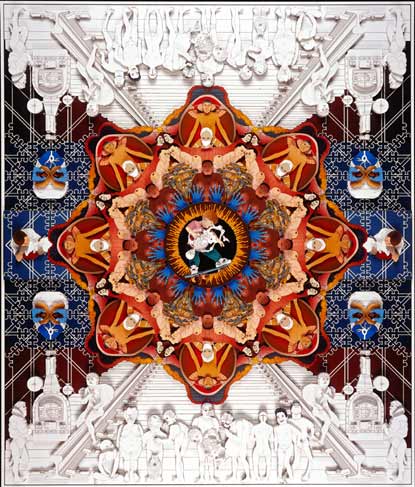
Aya Ben Ron  Four Seasons (Season 4), 2002, Print on photographic paper cut and glued in layers

One global outcome of contemporary technological advance is that in various aspects of human experience, built-in temporal and spatial distances seem to have been overcome. Two subjects can occupy the same Place in sound and image irrespective of the physical distance between them; they can share a virtual space through avatars that serve and are experienced as online extensions of the self, and access physical spaces in temporally disparate and spatially remote locations through pervasive networks of live webcam and satellite broadcasts.

In a very real sense, contemporary communications have rendered the world smaller. Yet even as technology pursues speed as a means to overcome physical distance, it is casting doubt on the very need for movement.
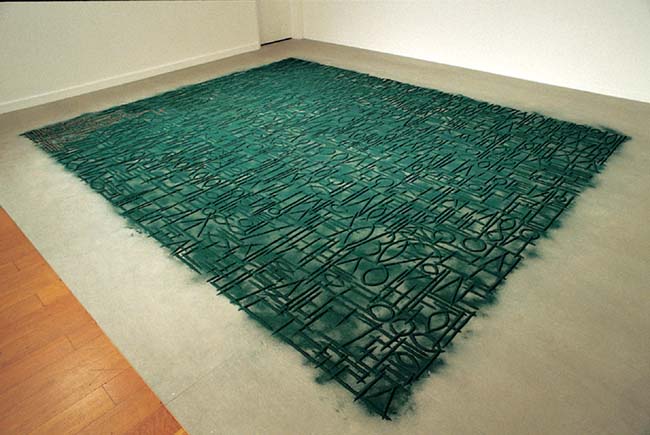
Oh Inhwan, When a Man Meets Man in Seoul

In a wide range of disciplines - phenomenology, psychoanalysis or metaphysics, to name a few - Place and its relation to the attendant concepts of Distance, Boundaries, and Movement have been considered fundamental for the production of Meaning. Shifts in their essence - and in their relations - are bound to affect changes in whatever meaning can be culled from them.

The deception inherent in modern communication technologies is that the human subject occupies and controls the world from the center, namely that he or she experiences a transcendence of boundaries, and by being able to simultaneously "be" both outside and within, approaches a sense of omnipresence. But omnipresence has its risks. As my gaze shifts from within my room to the outskirts of the planet and back again to gaze at the gaze of my gaze from the outside-in looking out and in and out again ad infinitum, I face the threat of losing myself to my "self". Paradoxically, in the relationship between Man and Place, the desire to overcome distance and collapse the boundaries of locality may spell the loss of the ability to "leap", the loss of the possibility for transcendence." read all

Monday, August 28, 2006

Free Territorry

I was touched very much by the work of artist Igor Tosevski, (living in Republic of Macedonia) and i'm honored that he let me post some of his work in here, and had explained about his concepts:

The Free Territories are conceived as traps for free spontaneous performative expression. They are in fact templums in whose borders any act, gesture, action/no-action or even shadow becomes a pure conceptual artistic action, echoing in space as a haiku whisper. This was based on an arrangement between the passerby and myself and achieved by means of various flyers and ads in the local newspapers and in the form of a Declaration of Free Territory.

The locations I saw suitable for creating the Free Territories were parts of the public spaces that maintain an undefined status, a kind of “no-man’s land” or neutral zones within the city scape. They were created consecutively. Outlined in yellow paint, their numbers grow by the day. Some were renewed while the others were left to fade away quietly under the footsteps of the crowd or the rain. None of them were made to last. They are all around us in the urban landscape existing also as an attempt to fill in the gap in the harmony of the specified site or perhaps - to create a new one.

Every single object or action caught within the borders of the Territory becomes an art-object, ready-made or social sculpture. Respectfully, every passerby is a potential performance artist, a poet of gesture or a creative activist.

Free Territories are pockets of creative freedom where the choice of the individual sways over the dominant vulgarity of politics. They represent junctions along the road to the essential state of Art. They are enclaves of social expression. Therefore, in the Free Territory there are no limitations or restrictions of any kind.

I see the Free Territory as an opportunity for each individual to act as an artist. Stepping over the Territory becomes an act of the subtlest nature; within the yellow line, each uttered word, whisper or even thought becomes an autonomous conceptual action equal to Ives Klein’s leap into empty void.

Saturday, August 26, 2006

In here

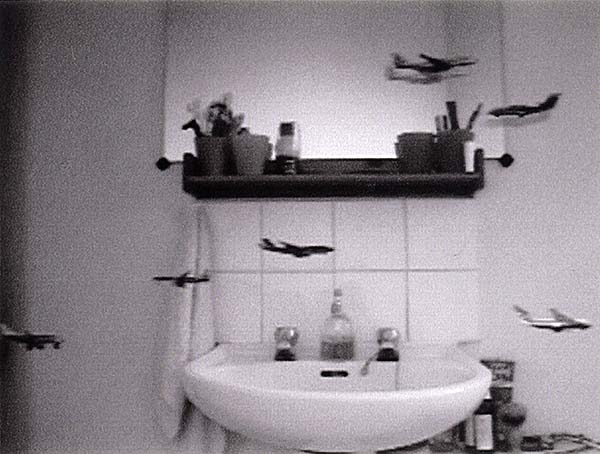
Visiting again an Artist i'm deeply touched by, his video works has a dream-like quality that offer a magical transformation of an ordinary domestic space and all of them introduce elements that are surreal but characteristically serene. Here are some stills from various works by HIRAKI SAWA. The artist say that his works are about travelling without leaving a place and also about his own feelings of alienation and on arriving to Britain from Japan and a period of living in London flats. watch the Video project Going Places Sitting Down

HIRAKI SAWA Going Places Sitting Down, 2004. 3 channel video projection, Commissioned by the Hayward/Bloomberg Artists' Commission

Hiraki Sawa. Still from Dwelling, at the Barbican

Trail, 2005 Digital video, stereo, black and white.14 minutes

Gutenkarte - mapping books

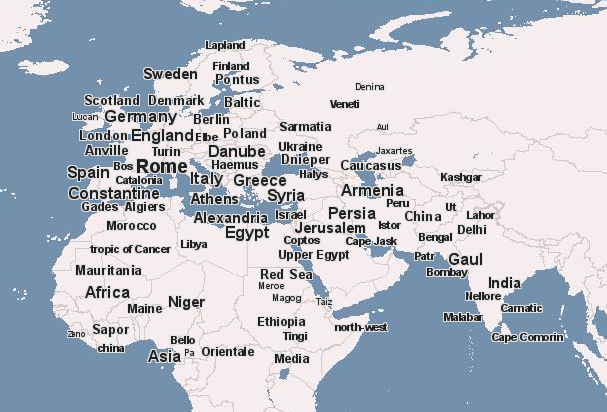
Gutenkarte is an effort to map books by MetaCarta. Gutenkarte is a geographic text browser, intended to help readers explore the spatial component of classic works of literature. The website takes text from books in Project Gutenberg, stores these locations in a database, along with citations into the text itself, searches them for the appearance of place names, and plots them on a map of the world using their own GeoParser API, creating an astonishing visualization of the world described in a text. and offers an interface where the book can be browsed by chapter, by place, or all at once on an interactive map.

Today, while trying to enter the live maps, i could not, and kept on getting errors....Ultimately, Gutenkarte will offer the ability to annotate and correct the places in the database, so that the community will be able construct and share rich geographic views of Project Gutenberg's enormous body of literary classics.
Here, for example, is a map of Edward Gibbon's Decline and Fall of the Roman Empire:

(Click on the picture to view the live map.) It's not perfect yet: note that "china" is in the Ivory Coast, and "Asia" seems to be located just off the coast of Cameroon. But the map does give an immediate sense of the range of Gibbon's book: in this case, the extent of the Roman world. The project is still in its infancy: eventually, users will be able to correct mistakes.

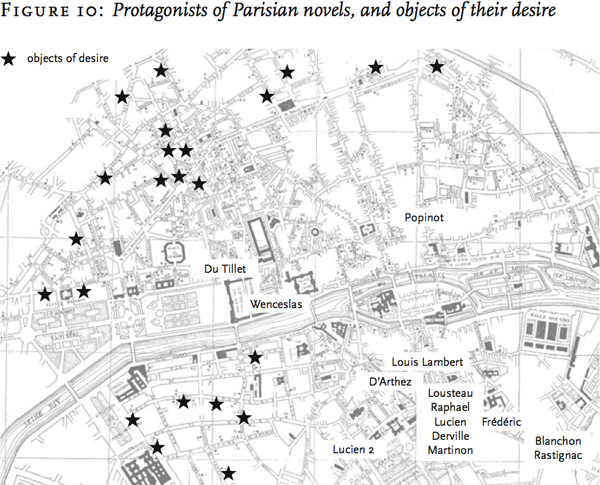
Gutenkarte suggests ways of looking at texts Here, for example, is a map he constructed of Parisian love affairs in the novel, demonstrating that lovers were usually separated by the Seine:

via futureofthebook

Friday, August 25, 2006

ideal city

The Work of Von Gerkan, Marg and Partners in China.

"Over six years, gmp has been involved with two-hundred design projects in China, thirteen of which have been implemented, reflecting the rapid transformation and growth that many Chinese cities are currently undergoing. The main focus of this exhibition is Lingang New City, an entirely new port city for 800,000 inhabitants near Shanghai. The plan of this city around a circular lake relates to ideas of the 'ideal city' and the history of this concept, as a subject of architectural debate, is also traced here: the city as metaphysical expression, of materialised spirituality and calculated rationality. Curated by Bernd Pastuschka." via the incredible cityofsound. highly recommanded reading is also The Ideal City - Vancouver Working Group Discussion Paper

Thursday, August 24, 2006

In the Garden

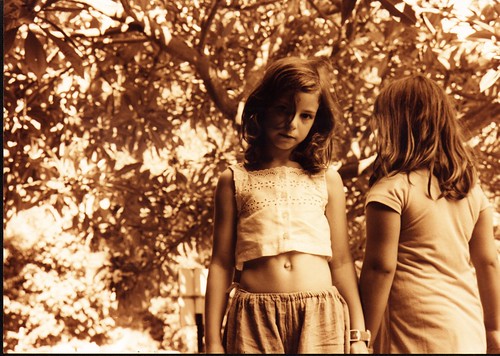
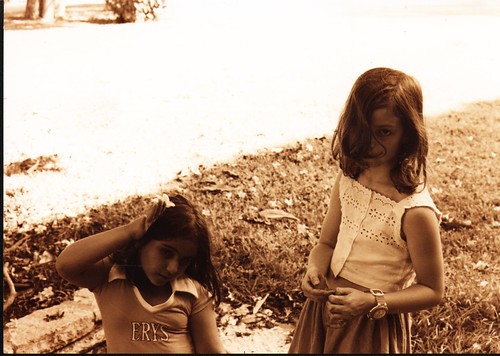
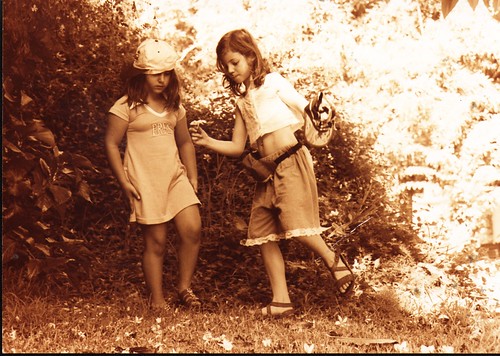
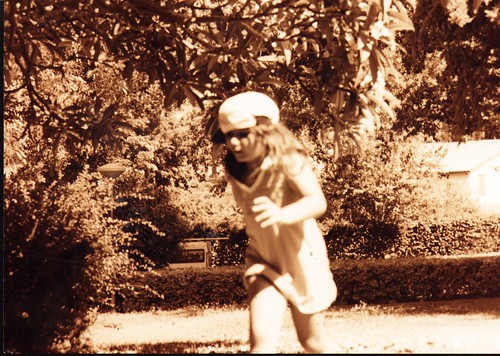
Orphee and Rotem, in the Garden. July 1998, Wiezman Institute, Rehovot, Israel

Dream Soldier

Moti Sagron - Born in Tunis in 1954, immigrated to Israel at the age of 14. After his army service, He studied at the Bezalel Academy of Art in Jerusalem under leading Israeli artists. Moti's Art is for sale and you can see his gallery Moti Sagron, Dream Soldier

Eberhard Havekost, Sniper 1, M98, Oil on canvas, 11.8 x 15.75 inches

Tuesday, August 22, 2006

First ever 'world map of happiness'

Adrian White, social psychologist at the University of Leicester in England, has produced the first-ever "World Map Of Happiness". and it is interesting while viewing it to see the List of countries by suicide rate page as well.

via According to Dr. White, happiness is found to be most closely associated with health, followed by wealth and then education. The meta-analysis is based on the findings of over 100 different studies around the world.(The British psychologist analysed data published by the CIA, UNESCO, the WHO and several other organizations measuring data from over 80,000 people worldwide). And the winner is... Denmark. This comes as quite a surprise for most people, since the country in northern Europe is widely known for its high suicide rate. The other Scandinavian countries, score very well, too, though they all have a relatively mild climate and long winters. Read More The 20 Happiest Nations In The World: 1 - Denmark 2 - Switzerland 3 - Austria 4 - Iceland 5 - The Bahamas 6 - Finland 7 - Sweden 8 - Bhutan 9 - Brunei 10 - Canada 11 - Ireland 12 - Luxembourg 13 - Costa Rica 14 - Malta 15 - The Netherlands 16 - Antigua and Barbuda 17 - Malaysia 18 - New Zealand 19 - Norway 20 - The Seychelles Other Notable Happy Countries: #23. USA #35. Germany #41. UK #62. France The Three Least Happy Countries: #176. Democratic Republic of the Congo #177. Zimbabwe #178. Burundi
Monday, August 21, 2006

Music Drawings

As A Humument could be said to be the poetry of a non-poet so the pieces of music that I have written could be called the compositions of a non-composer.

Tom Phillips

Six of Hearts: no. 1 Opus 16, collage and ink, 1991.

see more

via thingsmagazine

This works do reminds me of illuminated manuscripts of music

Sunday, August 20, 2006

The map is not the territory

In the beginning, maps were fiction. Inherited from the past were the fables and legends of Greece and Rome, along with tales from Celtic and Norse mythology. These were blended with information brought back by occasional mariners, who, in expanding their trade routes, ventured a bit farther than any before them, or by chance came upon an unknown island when tempestuous weather blew their vessel off course. Gradually, this mixture of legend, speculation, and travelers' tales began to be replaced by a new kind of geographic knowledge, one that was the result of direct observation. We perceived our world as myths defined by belief not geography. Maps of these imagined worlds came in many shapes and sizes, but they all mixed the unreal with snippets of the real world. The process of mapping the real world was one of going from geographies of ideas to maps of real geography. On the Internet, we will pursue a reverse path: maps of the Internet will progress from our current maps of network topologies to maps of virtual worlds that we build, maps of ideas and thoughts.

Coined by Alfred Korzybski, The map is not the territory is a related expression meaning that an abstraction derived from something, or a reaction to it, is not the thing itself, e.g. the pain from a stone falling on your foot is not the stone; one's opinion of a politician, favorable or unfavorable, is not that person, and so on. A specific abstraction or reaction does not capture all facets of its source and thus may limit an individual's understanding and cognitive abilities unless the two are distinguished. Computer-based digital multimedia is made palpable within highly mutable electronic environments. The very nature of our understanding of context has been altered because of the unfixity of these technological surroundings. The potential for instant distributed connection to other computers on an international scale also adds to this complexity. All of this activity takes place in what could be called an environment of "Simulacra and Simulation." Lawrence Wiener, NACH ALLES/AFTER ALL, 2000. Language, Dimensions variable. Solomon R. Guggenheim Museum, Commissioned by Deutsche Bank AG in Consultation with the Solomon R. Guggenheim Foundation for the Deutsche Guggenheim Berlin. 2006.6. © 2005 Lawrence Weiner/Artists Rights Society (ARS), New York. In his book Simulacra & Simulation, Baudrillard argues the following:

Today abstraction is no longer that of the map, the double, the mirror, or the concept. Simulation is no longer that of a territory, a referential being or substance. It is the generation by models of a real without origin or reality: A hypperreal. The territory no longer preceeds the map, nor does it survive it. It is never the less the map that proceeds the territory - pressesion of simulacra- that engenders the territory. (Baudrillard, 1994) via

Thursday, August 17, 2006

Borderers

Anna Bella Geiger"On Nacar", 2003 Perlmuschel, Metallblech mitWeltkarte eingeprÃĪgt12 x 6 x 3 cm

Friday, August 11, 2006

New York City Walk

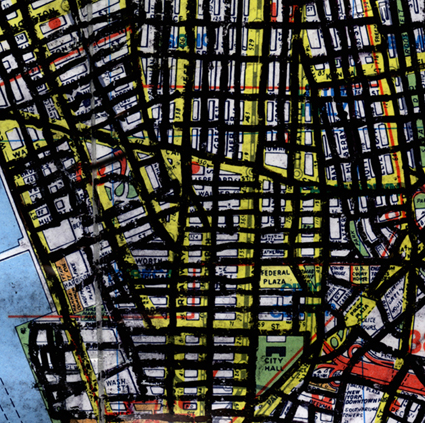
Caleb Smith began visiting as many neighborhoods in NY since, 'Over a Two Year Period he explored them systematically. He bought a Hagstrom map of Manhattan, which he laminated. As he walked, he marked off the streets with a black marker. He took notes and a lot of photos along the way. After about a year, he had made much more progress than he expected, and it seemed natural to extend the walk to the entire island. Eventually he walked over 700 miles.

via plep

Wednesday, August 09, 2006

The World in the Moon

At some time between 1764 and 1772, the printmaker Filippo Morghen , a Florentine based in Naples, issued a curious set of ten etchings under the title ‘A Collection of the most notable things seen by Sir Wilde Scull, and by M. de la Hire, in their famous voyage from the Earth to the Moon.’ Details from these prints follow below.

via

world is a complex storm of mathematics

'...with the world political situation as it is at the moment the political radical is put in a difficult position because, how do you rebel against chaos? You know, much as political conspiracy theorists would like to think otherwise, the brutal truth of the thing is nobody's in control, this is a runaway train. Nobody's in control, there's not some big conspiracy in control, whether it's Jewish bankers or nazis or CIA spooks, the simple truth is that the world is a complex storm of mathematics, basically... Very complicated mathematics that is beyond human comprehension.' -- Alan Moore.

Tuesday, August 08, 2006

New York chocolate map

Chocolate and Maps, 2 great passion of mine. from large to tiny. Maps, what can I say, I chase them, map them truly love them, making many of my virtual most passionate journeys with. Chocolate, The sin sublime, Food For The Goddesses.

Soleil Noir - Darks

Soleil Noir - Dark

So i was trying to see how can one connect them both: So it has come to this. Chocolate, a comfortable world that for many people exists between the downscale joy of a Kit Kat bar and the exhilaration of a well-made ganache, now requires a sommelier.

Chocolate map by Bill Yosses; photographs by Tony Cenicola/The New York Times

Grignotine - Dark

New York chocolate map

Now it is time for me to dive into a Dark Pacifique

HITTING THE ROAD

The oil-company road map is a tangible record of the development of a purely American fascination with the automobile. In the early teens, the oil-company road map appeared for free in gas stations across America. Soon, as more and more Americans owned cars and began driving for pleasure, the oil-company road map became the primary medium through which Americans found their way on the ever growing network of the nation’s roads and highways. The maps were designed to advertise the products and services of a company, but also to encourage the motorist to travel and discover America.

Maps in America at the turn of the century were primarily geopolitical. Mountains, rivers, major cities, and political boundaries were far more significant to cartographers than the parallel ruts in the dirt that connected village to village. The invention of the bicycle and the newfound personal mobility it provided created a need for better roads and better maps. The automobile soon followed, and the maps were overprinted with a contrasting color to indicate roads appropriate for the car. By 1910, the model T had created a significant demand for maps, and guides like the Mendenhall Guide and Road Map of Connecticut began to appear. This map shows main routes, good roads, common roads and railroads. It also includes a step by step description of travel between major cities. Click the number to see enlarged maps The first oil-company road map appeared in the early teens. Although many companies claim to be the first to issue promotional maps, Gulf was the most prolific producer in the early teens. By the twenties, most major oil companies had some form of promotional map program. The covers often featured a man and a woman discovering the joy of driving through the countryside, enjoying the freedom and mobility the automobile offered. Gulf’s map number 11 shows a touring car with the top down, shooting into the landscape beneath the orange sun--the Gulf logo. The 1927 Standard Oil map of Ohio compares the motorist to the pioneer in the conegestoga wagon, blazing trails and discovering new lands. The Kentucky Standard Oil map of the same year has a three panel spread, depicting a motorist using a free map to plan their descent into the rolling valley below. Oil companies were encouraging the automobile owner to travel and explore the country--using their gasoline. Click the number to see enlarged maps

Monday, August 07, 2006

Five ways to map the world.

Five ways to map the world. Listen to the Streaming MP3 file of the program (I liked mostly the First and the last interviews) An exrtact from the program: Here are five stories--one about people who who map the world the traditional way--by drawing maps of things you can see. The other stories are about people who map the world using smell, sound, touch, and taste. The world re-drawn, by the five senses. Ralph Gentles and five other people spend each summer creating a map of every crack, every depression, every protrusion, every pothole in the sidewalks of New York City. We hear why, and we hear all the things his map does not include. Mapmaking means ignoring everything in the world but the one thing being mapped: whether it's cracks in the sidewalks or the homes of Hollywood stars. And, according to cartographer Denis Wood, we live in the Age of Maps: over 99.9 percent of all the maps that have ever existed have been made in this century. (5 minutes)

Adolf Wolfli - General View of the Island of Neveranger 1911, colored pencil on newsprint

Act One. Sight. Ira with Denis Wood, author of the Power of Maps and Seeing Through Maps: The Power of Images to Shape Our World View. Wood talks about the maps he's made of his own neighborhood, Boylan Heights, in Raleigh, North Carolina. They include one traditional street locator map, plus a map of all the sewer and power lines under the earth's surface, a map of how the light falls on the ground through the leaves of the trees, a map of where all the Halloween pumpkins are each year, a map of all the graffiti in the neighborhood and of who was mentioned most often in the neighborhood newspaper. He is, in short, creating maps that are more like novels, trying to describe everyday life. (8 minutes) Act Two. Hearing. Jack Hitt visits Toby Lester, who has mapped all the ambient sounds in his world: the hum of the heater, the fan on the computer. (11 minutes) Song: Billy Bragg and Wilco "Way Over Yonder in The Minor Key" Act Three. Smell. A story about a device that charts the world through smell and only smell. Nancy Updike visits Cyrano Sciences in Pasadena, where researchers are creating an electronic nose. This story was prepared in the form of one of those "Frequently Asked Questions" pages on the Internet. (9 minutes) Act Four. Touch. Deb Monroe reports on how she has been mapping her own body through her sense of touch. (9 minutes) Act Five. Taste. Jonathan Gold goes to the places on Pico Boulevard in Los Angeles that he visited back in the early 1980's. He tells the story of how he decided to map an entire street using his sense of taste, and of how it changed his life. {via }

World Language Mapping

*(for a moment this colorful maps - makes me dream of a world that is all a huge garden of pleasures, no wars, no hunger, no death) ’super high resolution maps of language distribution around the world. Dr. Huffman has classified the languages of the Ethnologue into broader groupings following Merritt Ruhlen’s A Guide to the World’s Languages (published 1987, 1991 by Stanford University Press), and has produced as series of maps of language phyla and families using this classified data and GMI’s World Language Mapping System and Seamless Digital Chart of the World geographic datas sets.. PDF versions of the maps available for download, as are Dr. Huffman’s data and ArcGIS project files.

via mappinghacks

astropoetica

Astropoetica: Mapping the Stars through Poetry.

Clickable Star Chart, each constellation was granted by an original poem

Clickable Star Chart: Galactic South. click on the link to get in to the poetic path. by clicking on the map it will take you to different poems dedicated to a star.

here is one:

Apus by Johann Bayer

In the nooks of the darkness somebody has prepared a trap the people's hopes hardly flicker like some fragile stars hung by an insectarium

beyond the dreams it raises splitting the darkness

the Bird of Paradise

world map

first printed map to show the discoveries of the Portuguese along the coast of Africa, the first on which India is drawn as a triangular projection from the south coast of Asia, and the first map showing Greenland as an island and not connected to Europe.

The voyages of Christopher Columbus, John Cabot, and Amerigo Vespucci dramatically changed the world map. One of the earliest printed maps to incorporate this new world view was Johann Ruysch's map which is found in the 1507 reprinting of the 1490 Rome edition of Ptolemy's Geographia, both of which are represented in the division. (Atlas Collection)

book of stars

"There´s Heavens inside buidings, there´s Heavens inside the pages of books. There´s Heavens above us. We can see the constellations, the winds,the cosmos if we search well."

Above our cities there is the sky. Above our cities we can found the stars, planets, constellations,galaxies. Don't forget your place in the Universe.

Apocryphal maps

The 3,600 year old Sky Disk of Nebra is the world's oldest image of the cosmos... see more:

Tribute to Giordano Bruno.( 1548-1600 )

Duet maps

Visiting back Kim Joon, i have found great new works, and more then ever, i can relate to those as if he is mapping the human body, mapping a road map, a dream map, or is it only me that sees and seeks for mapping clues where ever i lay my eyes?

Kim Joon, duet-monkey, digital print 2006

Sunday, August 06, 2006

Glass-Maps

This entry is dedicated to a special person, i admire, she is an Israeli artist, a poet, a gifted writer and an endless seeker of beauty and creation. She is telling in her Hebrew blog, about a new passion of hers, and it's about Glass beads making, she is also creating the most amazing Crystal thread, as well as many other things. As she made few month ago a ghost map i was stroked by, and as respect for her creation paths, I somehow combined them both: her map quest and her love for Glass, as well as my feeilings towards our little planet earth and it's fragility that seem so concretely this days - here- is, some works regarding all that - all are using Glass to depict Our World and it's political and cultural boundaries that shape identity.

Robert Smithson, Map of Broken Glass (Atlantis), 1969. Lannan Foundation; long-term loan. Photo: Florian Holzherr.

samantha clark. Detail of installation Spill 1998-2002, Glass, Maps

Around 4500 small glass drops each with a tiny fragment of map set behind it, fixed directly to walls and floor.

This work has expanded to include maps of every country it has travelled to for exhibition, and now Italy, France, Scotland, Portugal all feature. This piece originated during a residency at the British Scool at Rome as part of the Helen Chadwick Fellowship 1997-8 and has migrated and grown ever since.

WORLD MAP The technique used in the execution of world maps with the metallic geometric shapes utilized the old fashioned solar reflective films of the kind used by jet fighter pilots on their visors in the 1950's. These films, until very recently were still readily available. Rick has also done other maps with polymer texturization to add visual interest to the paintings.

Few months ago i was deeply impressed by Mona Hatoum, “Map” an installation about the political and cultural boundaries that shape identity.

Mona Hatoum, “Map” (detail), 1999, mixed media installation, dimensions vary.

Map is made up of clear glass marbles spread across a floor, their arrangement seemingly random until the viewer gradually recognizes continents. National and political borders, though, are not marked. The marbles’ transparency and the fact that they could roll easily suggests the fluid nature of such boundaries. The marbles’ placement on the floor hints at the possibility of walking on them and shifting their arrangement--a metaphor for political instability.

Mona Hatoum