Tuesday, January 30, 2007

The song of the stone

A list of experimental Film Works by Toshio Matsumoto for view on-line.

among the most beautiful is The song of the stone (1963) so very beautiful, slow and pensive (some of the films are in Japanesse, with no subtitles, but it is beautiful and viewable just the same-it's a visual poetry!) an interview with the artist

I WAS LOST

For the past few days, i've been watching LOST series; I'm completely captured by it. As someone who doesn't even posses a TV at home, and not thinking higly about TV all together, this series have enchanted me like a child being introduced to a Pegasus who came to visit him in an imaginary garden....

Or maybe it is simply the yearning for being lost in an Island such this

Sunday, January 28, 2007

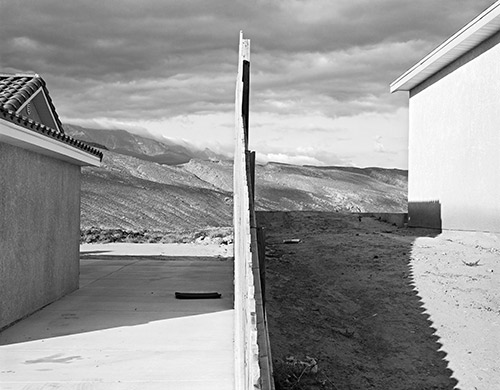
Photographs of the Suburban West

Steven B. Smith's photography. via Conscientious

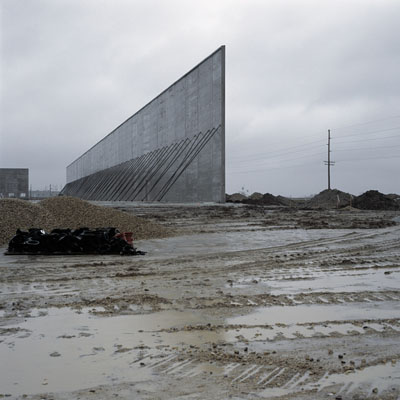
Hurricane, Utah, 1997

Don To Earth

Donald Crowdis, 93 years old, probably the world's oldest bloggers out there ponders Life, the Universe, and Aging.

Give it a Try

Via seedmagazine

Films worth watching

The Fugitive Kind Directed by Sidney Lumet, Screenplay by Tennessee Williams. starring Marlon Brando, Joanne Woodward, and the amazing Anna Magnani

Reflections in a Golden Eye Directed by John Huston starring Marlon Brando and Elizabeth Taylor

Saturday, January 27, 2007

Daguerreotypes

The daguerreotype is an early type of photograph in which the image is exposed directly onto a mirror-polished surface of silver bearing a coating of silver halide particles deposited by iodine vapor. Unlike later photographic processes that supplanted it, the daguerreotype is a direct positive image making process with no "negative" original.

gallery of Daguerreotypes

FLOWERS

By Katina kamatson from NINE FLOWERS series

Friday, January 26, 2007

Ode

by Arthur William Edgar O'Shaughnessy

We are the music makers,

And we are the dreamer of dreams,

Wandering by lone sea-breakers,

And sitting by desolate streams;

World-losers and world-forsakers,

On whom the pale moon gleams:

Yet we are the movers and shakers

Of the world for ever, it seems.

With wonderful deathless ditties,

We build up the world's great cities,

And out of a fabulous story

We fashion an empire's glory:

One man with a dream, at pleasure,

Shall go forth and conquer a crown;

And three with a new song's measure

Can trample an empire down.

We, in the ages lying

In the buried past of earth,

Built Nineveh with our sighing,

And Babel itself with our mirth;

And o'erthrew them with prophesying

To the old of the new world's worth;

For each age is a dream that is dying,

Or one that is coming to birth.

A breath of our inspiration,

Is the life of each generation.

A wondrous thing of our dreaming,

Unearthly, impossible seeming-

The soldier, the king, and the peasant

Are working together in one,

Till our dream shall become their present,

And their work in the world be done.

They had no vision amazing

Of the goodly house they are raising.

They had no divine foreshowing

Of the land to which they are going:

But on one man's soul it hath broke,

A light that doth not depart

And his look, or a word he hath spoken,

Wrought flame in another man's heart.

And therefore today is thrilling,

With a past day's late fulfilling.

And the multitudes are enlisted

In the faith that their fathers resisted,

And, scorning the dream of tomorrow,

Are bringing to pass, as they may,

In the world, for it's joy or it's sorrow,

The dream that was scorned yesterday.

But we, with our dreaming and singing,

Ceaseless and sorrowless we!

The glory about us clinging

Of the glorious futures we see,

Our souls with high music ringing;

O men! It must ever be

That we dwell, in our dreaming and singing,

A little apart from ye.

For we are afar with the dawning

And the suns that are not yet high,

And out of the infinite morning

Intrepid you hear us cry-

How, spite of your human scorning,

Once more God's future draws nigh,

And already goes forth the warning

That ye of the past must die.

Great hail! we cry to the corners

From the dazzling unknown shore;

Bring us hither your sun and your summers,

And renew our world as of yore;

You shall teach us your song's new numbers,

And things that we dreamt not before;

Yea, in spite of a dreamer who slumbers,

And a singer who sings no more.

via

Thursday, January 25, 2007

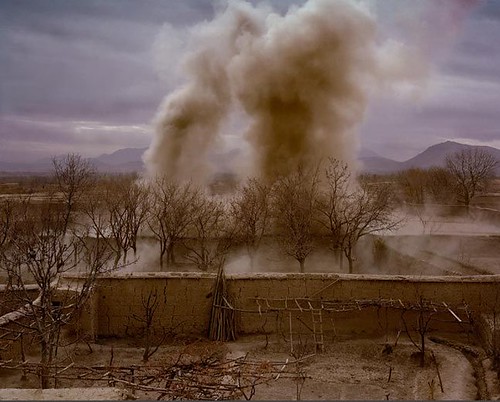
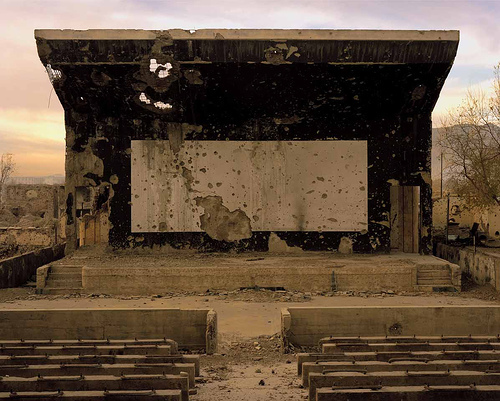
"Military Sublime"

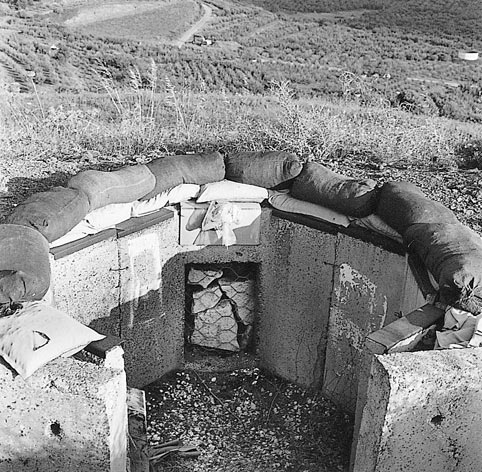
Simon Norfolk: From Afghanistan: Chronotopia- the book, but also available at the artist site- the beatitude and destruction goes hand in hand.... via

Bullet-scarred outdoor cinema at the Palace of Culture in the Karte Char district of Kabul.

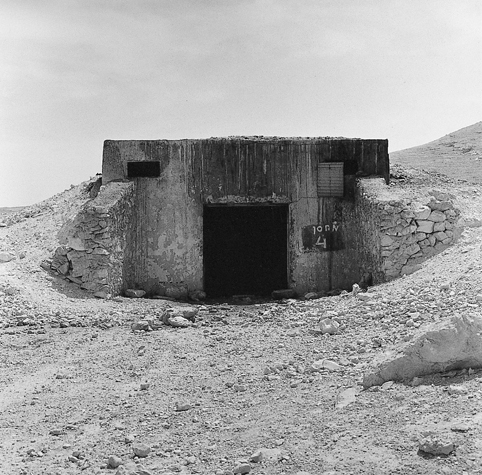
Roi Kuper, Nacropolis series:

Tuesday, January 23, 2007

Saul Steinberg

Untitled, c. 1951 Ink on photograph 16" x 20"

Steinberg gallery of work

Monday, January 22, 2007

Extreme Geography

by David J. Nemeth (author of Absurdist Cartography: The Dada Millennium Map of the United States)
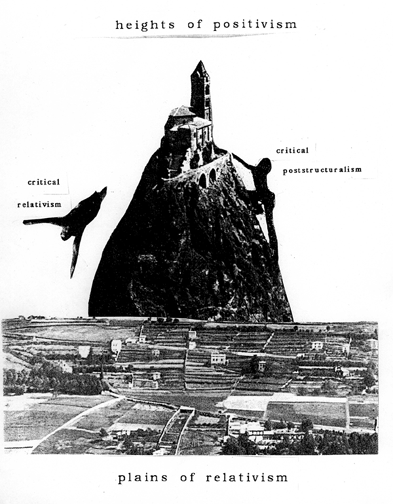
"Postmodern skepticism thrives on information surfeits, and ambiguous truths are bred wholesale by the speed in the span of cyberspace: this new flexibility in the accumulation of information now feeds a frenzy of popular skepticism about absolute truths that is much deeper and darker than the methodological skepticism in positivist science that continues to invest heavily in their credibilities."

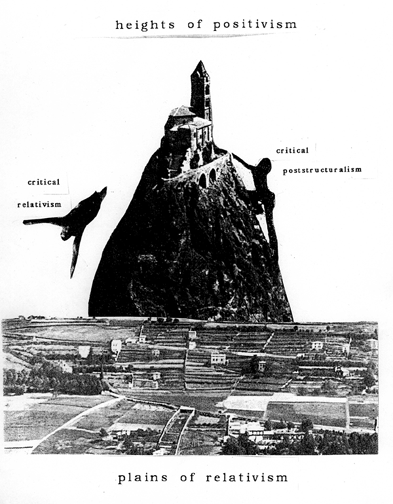
Figure 1

Figure 1 is a metaphorical device that conveys key ideas from this commentary. The mountain fortress of logical positivism is where scientific geography resides, claiming the high moral ground. The horizon of the entire surrounding epistemological landscape constitutes the normal curve, symbolizing the achievement of positivist science's hegemonic quest to universalize and generalize. From its privileged and lofty perspective, positivism presents itself to the world as the single source of scientific truth, the only reliable source of ultimate explanation and the best hope for human happiness. Positivism surveilles all the objects and relationships in a world it observes, names, knows as its unified domain, and attempts to describe in a lucid, straightforward manner. But there is more to language than lucidity. Below, and overshadowed, are the ludic slopes and plains of relativism, where dwell the contextualized, the situated, the localized, and the marginalized truths. Upon these playing fields there are no rules and nothing is alien to geographical investigation from the nomadic perspective of critical relativism. There is no obligation to work, only a desire to experience. The critical poststructuralist position is depicted as exploratory, yet it clings to the same towering outcrop of enlightenment bedrock that secures the positivist position. Critical poststructuralism is a tentative intellectual purchase, or temporary stabilization, between the heights of positivism and the plains of relativism. Its tethered position is no extreme departure from positivist science. In contrast, the critical relativist departure from the positivist stronghold is a flamboyant free fall that invites risky and uncertain exploratory experiences, and perhaps grave outcomes.

"I envision extreme geographers acting on impulse to merge with contemporary youth culture's amorality and indifference, by delving into the mysteries that incite it. To do so merges epistemology with attitude, whereupon moral pluralism becomes unmasked as moral relativism. "

read it

Dutch Ships

From the 1630s to the middle of the nineteenth century, Japan was practically closed to foreigners. The only Westerners allowed to stay in Japan and engage in trade were the Dutch.

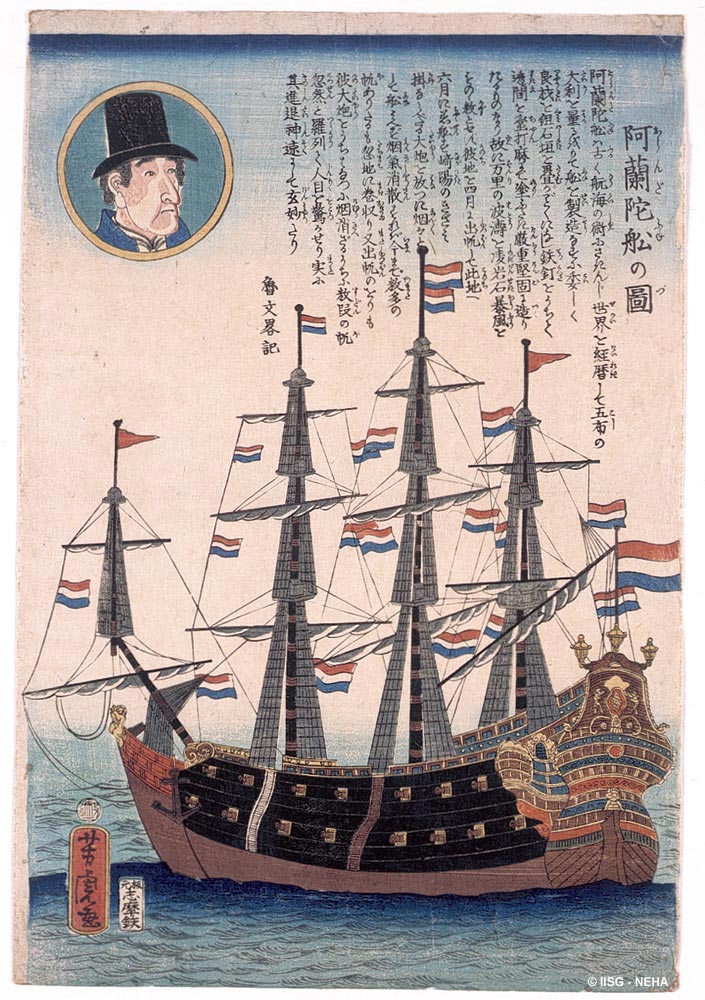
Some Dutch Ships woodblock prints from a digital exhibition of a collection of Japanese woodblock prints published between 1800 and 1865, depicting Dutch traders in Nagasaki.

Dutch ship. Oranda fune no zu. 1859.

Artist: YoshitoraPublisher: Shimaya, Yokohama36.5 x 25.5 cm. view details, as well a s translation of writings.

via electricedge

Sunday, January 21, 2007

The geography of thought

From a mindful critic by Julian Jonker about the book, Rhythm Science by Paul D. Miller, Cambridge: The MIT Press, 2004

"I live in a place where the progress of time is distributed as a fractal. It's complex, really. Or, as they say in mathematics, it's irreal, outside the cartesian geography of the real. Poses aside, there's no hope of keeping it real in this windswept city by the sea...The rhythm of this city measures the weight of the past rather than the lightness of the digital now, the unburdened flow of the current...You must understand, my city is a port city. It exists not as a place with roots in the soft earth of a continent, but as a point drifting along the routes that span oceans: oceans of sound, borrowing notes and rhythms from the trade winds."

"In four dimensions, this city is not a port, nor a point, but a vector: that which Miller describes as a "relation between a determinate and an indeterminate property". The vector, which has fixed dimensions but no fixed position, is the idea which can be recalled into any position in the geography of thought. The vector is the technology that transforms graffiti into wildstyle, that typographical art... . Rhythm Science is a vector: a DJ tool, ready to be played. In this manner too, the city drifts in the mists of time and histories, waiting to be activated. It is without stated intentions, a city at play. Press play, and let the flow of histories coagulate into a mix. ."

"This is a world where all meaning has been untethered from the ground of its origins", says Miller, "and all signposts point to a road that you make up as you travel through the text." Identity is skinnable, like a winamp player: download the source. "Identity," says Miller, "is about creating an environment where you can make the world act as your own reflection."

"...Long ago, genocide replaced genealogy. Forgetting drifts along the trade routes. We track the silences, looking for patterns. We call this rhythm, and use it to count time. "

The Great Book of All Forgotten Things

By W. B. Keckler

Children sit on a beach

face scintillant edge of light

and tiny pieces, unchosen

alphabet (broken shapes)

winking star, fish-body, wave

drift over nothingness

and we recoil

silence and blind

ellipses and loops

of ocean behind

making sets and subsets

drawing Venn diagrams

Saturday, January 20, 2007

Happiness is a place to visit

"Scientists have theorized that evolutionary outcomes of natural selection have given us our attraction to beauty. But when they investigated if beautiful people are happier than their counterparts, the surprising answer was no. As the current theory goes, we didn’t evolve for happiness; we evolved for survival and reproduction. Negative emotions like fear help us survive individually; positive emotions like joy help the community to survive.

We think we want to be happy all the time, but the fact is that an emotion, like happiness, is a primitive signaling system. They are how your brain tells you if the things you’re doing are enhancing or diminishing your chances of survival. Emotions are supposed to fluctuate. You’re not supposed to stay on “happy” during an earthquake. Happiness is a place to visit, not a place to live." via Medico Musings

approaching nowhere

Jeff Brouws from his series approaching nowhere

Thursday, January 18, 2007

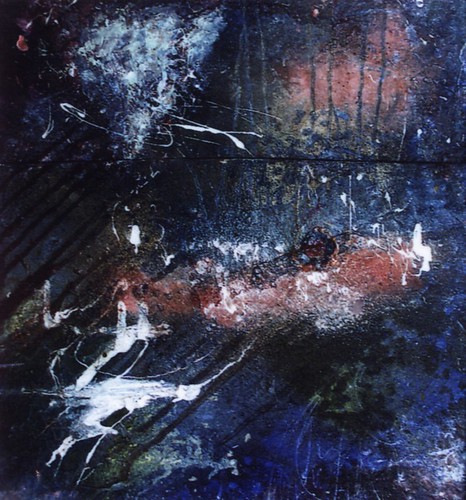
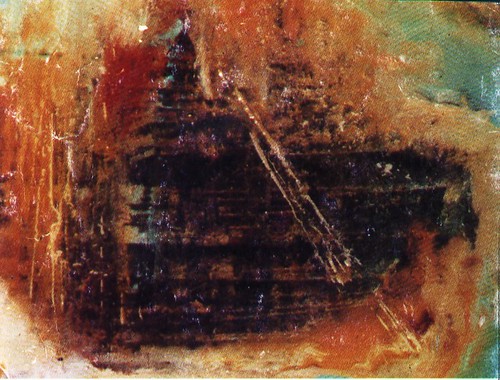
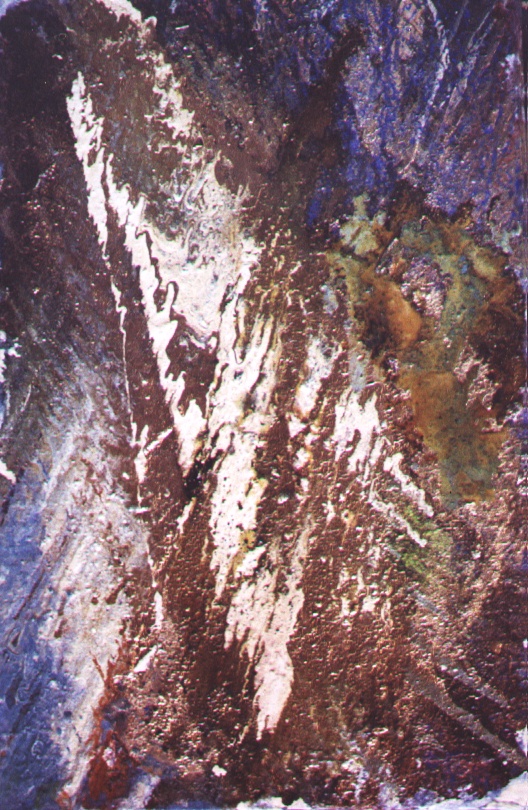
Paintings

by Olivier Senouf

oil, pigments on canvas

oil, pigments on canvas

oil, pigments on canvas

Wednesday, January 17, 2007

Paula

Paula. pimp up cup. C type print

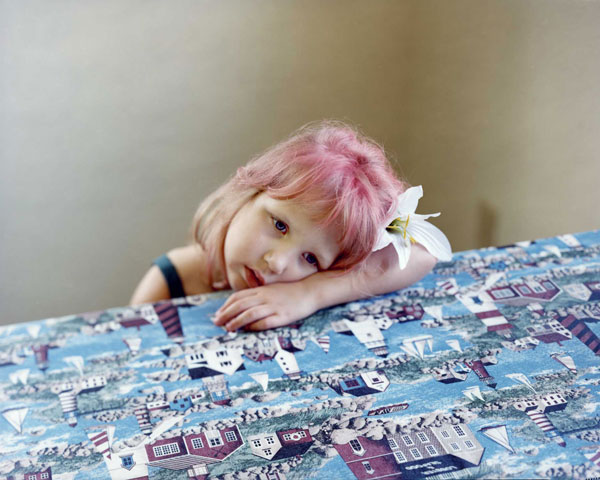
Hendrik Kerstens photographs of his daughter Paula

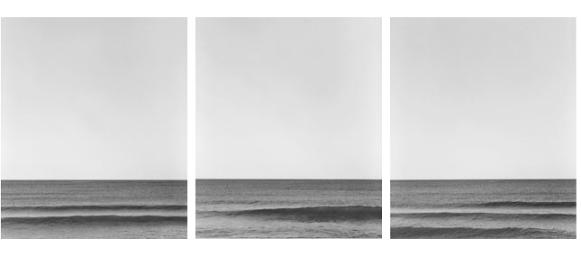
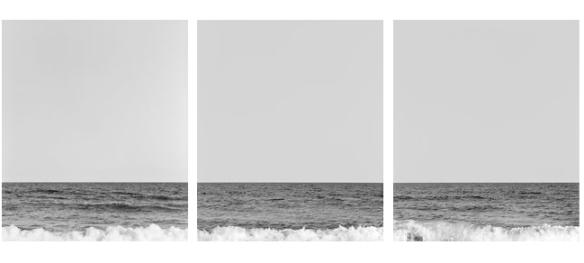
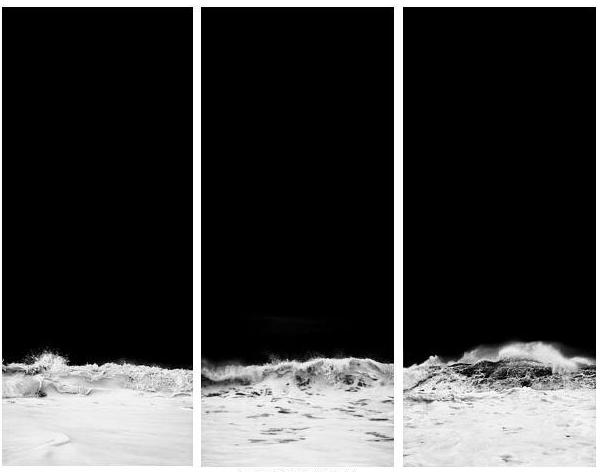
HORIZON

by Clifford Ross

HORIZON XI. Silver Gelatin Print10 x 8" (frame) 2001

HORIZON VIIISilver Gelatin Print10 x 8" (frame) 2001

HURRICANE SCROLL I, II, VI. Archival Pigment Print36 x 17" (paper) 2001

Clifford Ross's photography shows other fascinating aspects of water and land.

via Conscientious

Slow Ride

her site in here

Monday, January 15, 2007

Anne Ben-Or

Artist's Gallery

Sunday, January 14, 2007

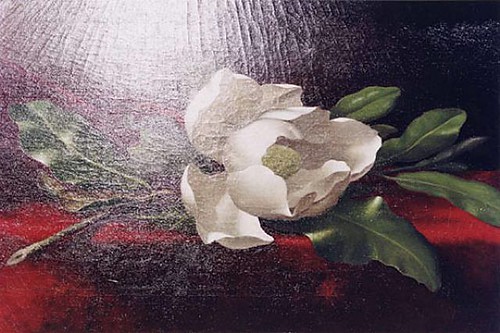
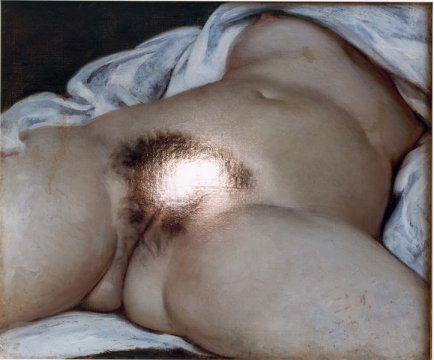
Permanent Collection

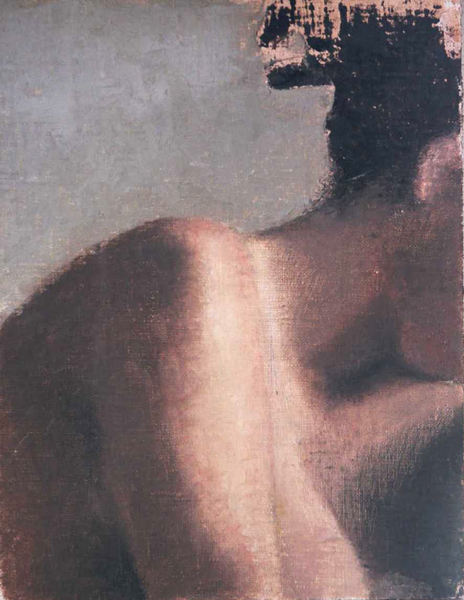
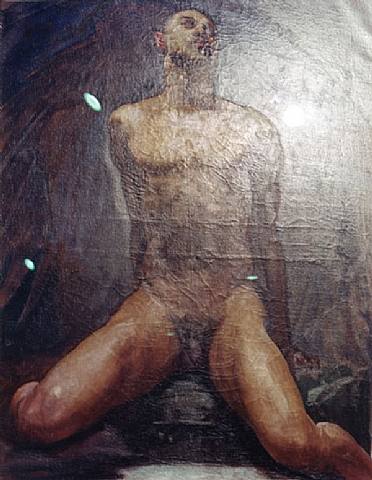
Nude Study

In 'Permanent Collection', Tim Davis focuses on paintings in museums, photographing them from oblique angles so that existing museum lighting glares off the paintings’ surfaces, changing their often-reproduced meanings.

Magnolia

By then enlarging the photographs to the size of the original painting, the light is allowed to do more than illuminate a painting’s image, but instead can obscure, erase, add humor, sadness, strangeness or narrative to objects we think of as fixed and permanent. read more

L'Origine du Monde

Mount St. Helens

Mount St. Helens: Photographs by Frank Gohlke:

Growth in old clear-cut, replanted sooner after eruption, is more advanced than in surrounding salvage areas, 1990

Aerial view: ash-covered snow, snow-covered ash. East flank of Mount St. Helens, Washington, 1982

Aerial view: looking south at Mount St. Helens, Washington, crater and lava dome, Mount Hood and Mount Jefferson in the distance, airplane in crater, 1982

Emmet Gowin Mount St. Helens:

Mount St. Helens, Washington1980

more of this series

Saturday, January 13, 2007

Changing the Earth

Emmet Gowin Started to make aerial photographs in 1980 as part of a commission to document the massive eruption of Mount St. Helens. Since then, Gowin has created hundreds of compelling aerial images of military test sites, farmland, battlefields, mining areas, and missile silos in such far-flung locations as Oregon's Columbia River, Kuwait, and the Czech Republic.

Mining the Coal Seam, Open Pit Strip Mine, Bohemia, Czech Republic, 1994

Emmet Gowin, Drainage Ditches in a Low Agricultural Field, Savannah River Nuclear Site, SC, 1992, toned gelatin silver print, Collection of the Yale University Art Gallery

Copper Ore Tailing, Globe, Arizona 1988 split toned gelatin silver print 24.1 x 24.3 cm.

Wednesday, January 10, 2007

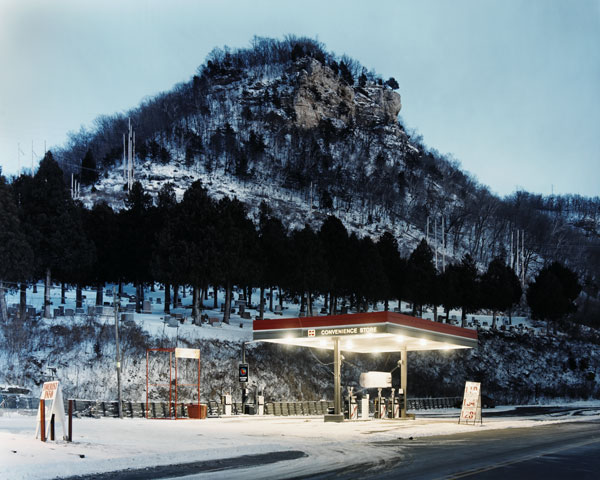
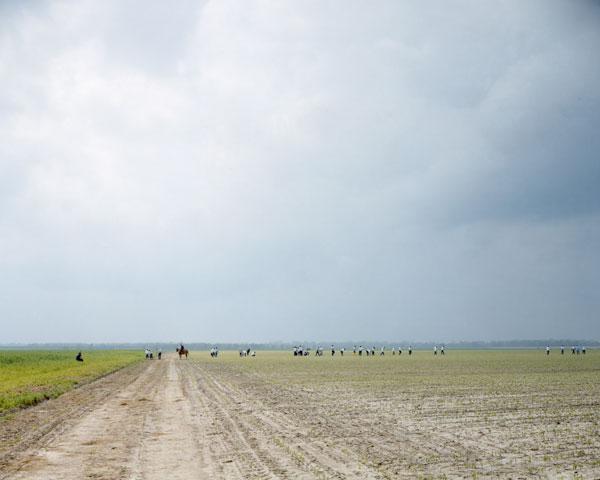
Alec Soth

The first image by Alec Soth that i've seen was Two Towels.

Been touched, made me look for more of his art, and what a striking delight it is!

Alec Soth's Site . and His blog

and this sweet heart as well:

From his series NIAGARA (a must!)

Falls 47 2005

Tuesday, January 09, 2007

Bob Brown,visual poetry 1920s

read all

via ubu

Holga images

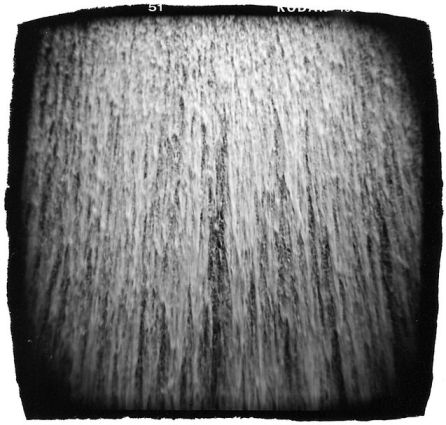
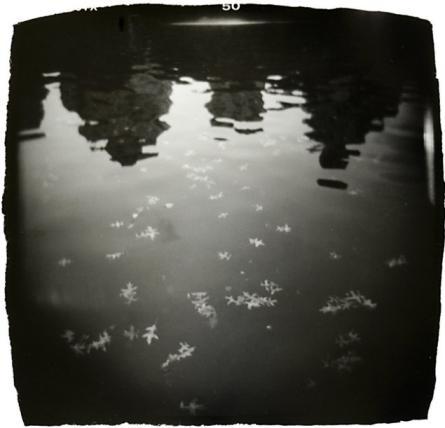
Beautiful Images made with a Holga plastic camera ( a sort of pinhole camera)

via bouphonia

Monday, January 08, 2007

Vera Lutter

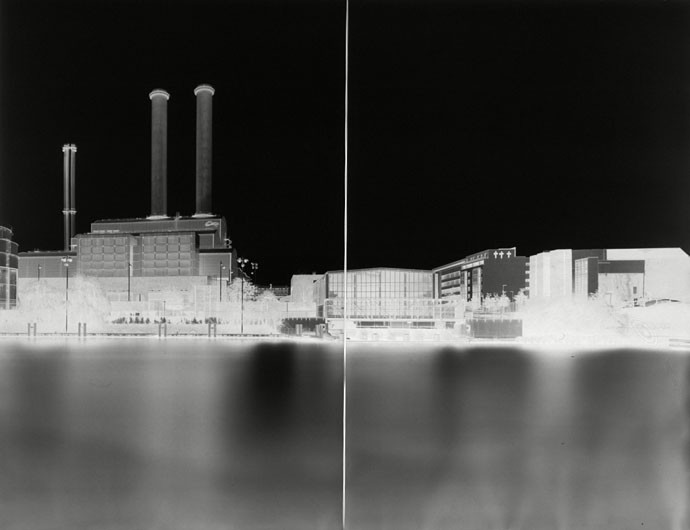
Berlin, Holzmarktstrasse, VIII: September 1, 2003 Unique silver gelatin print, mounted on museum board, framed behind plexi-glass2 panels, total: 231 x 285 cm

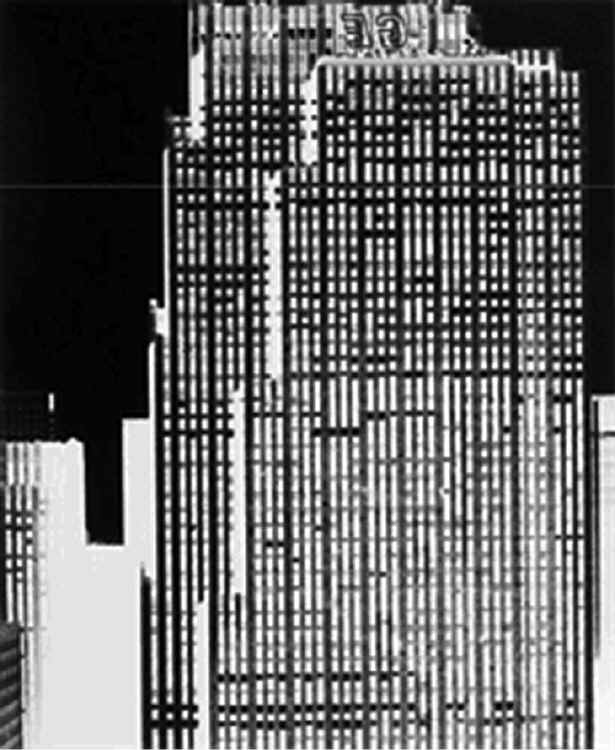
Grace Building: March 4, 2005 Impression argentique Gelatin silver print 23½" x 19"

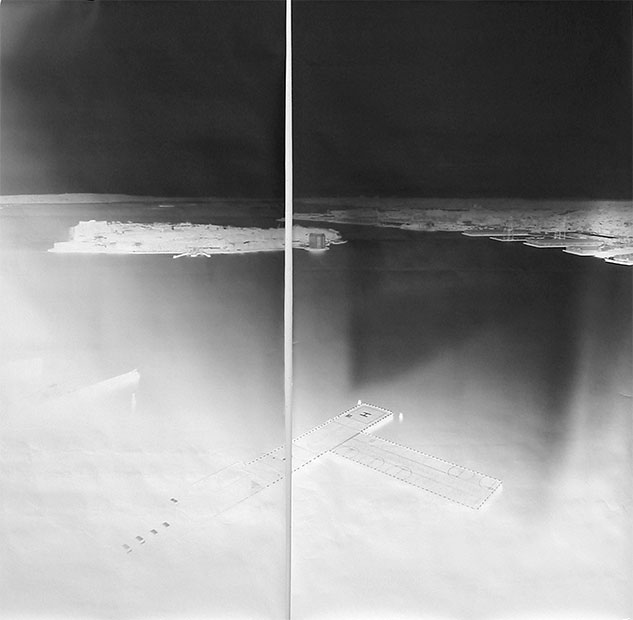
Using room-sized cameras, Lutter often inhabits the camera during the exposure which can last hours, days or even weeks. The camera obscura works with the premise that when light passes through a small hole into a darkened chamber it produces an inverted image on the opposite wall. Lutter projects her subjects onto photo-sensitized paper and develops them as unique negatives.

more works by the Artist can be seen here. and here. and here

an interview with the artist

South View, Old Slip: January 7, 1995 1995 Unique camera obscura, silver-gelatin print (two panels) 168.9 x 184.2 cm

Neologasm

the joy of new words ( a weblog )

HERE>

via plasticbag

Sunday, January 07, 2007

Atlas

Fred Wilson, “Atlas,” 1995, painted ceramic/globe/pushpins/flags, 20 x 11 1/2".

more works by the artist can be seen here and here and here

Manhattan WordMap

Came across by Howard Horowitz, 1997 Manhattan WordMap some time last February ...

This “wordmap” is both a poem and a map. It took the author, a poet and professor of geography at Ramapo College, a year and a half to design this poem about the city, its geography, cultural attractions, buildings, institutions, individuals, and his own personal memories.

Read Poem

and found it back in greatmap this week.

Friday, January 05, 2007

Parish Maps

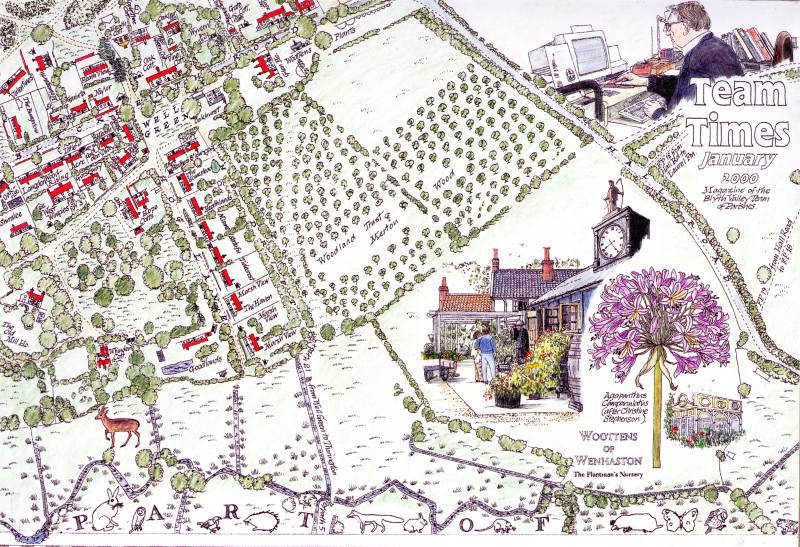
Fernhurst village - parish map, detail

Everywhere means something to someone. You don't have to own it, or even see it everyday, for a place, and its stories to be important to you. The combination of commonplace histories and ordinary nature makes places what they are. Things do not have to be spectacular, rare or endangered for people to value them and want them about their everyday lives. For visitors, a Parish Map offers a new way of looking at a place, and shows a glimpse of the vibrant life behind the obvious.

A Parish Map demonstrates what people claim as their own locality and what they value in it - wild life, history, work, landmarks, buildings, people, festivals. It does not have to be precise or cartographically correct, but by illustrating locally distinctive activities and features, it helps you to focus on the everyday things that make your place significant to you and different from the next. It can include the elusive responses which cannot be measured or counted and also the invisible - the stories, dialect, names and fragments of everyone's history.

Parish maps are pictorial and decorative. Typically they have main three main strands - a strong feeling for the past, the present day and local wildlife.

Wenhaston Millennium Map - an amazing parish map, it is divided into 24 panels. To view the panels in detail just click on any part of the picture above and that panel will open. To preserve all the detail the images are around 100 - 150kb so will take a few moments to load. Please be patient.

see as well the Chidham and Hambrook - The Parish Plan Parish Maps are a starting point for local action, they are demonstrative, subjective statements made by and for a community, exploring and showing what it cares about in its locality. They offer a way of communicating creatively and socially how rich everyday places are, and what importance seemingly ordinary things have to everyone. All kinds of people old and young, from varied cultural backgrounds, by sharing their ideas and knowledge, begin to cherish their locality more and often become involved directly in its care. Parish Maps can be made by anyone, in any way, of any place. 'Parish' is offered not to define but to describe the scale at which people feel a sense of familiarity and ownership in their place: home place, your own familiar territory, the neighbourhood to which you feel a sense of belonging, the locality which 'belongs' to you. Many have defined their own edge, but others have used the Parish Boundary and indeed discovered much of history and nature by so doing.

Whether you live in a town, a city or in the country, there are some things around you which are part of your daily round. Perhaps there are buildings which seem 'at home' in the landscape because they reflect the lives of the people who lived in the area before you - a mill, a line of houses, a quay or railway station; perhaps you enjoy a walk along lanes lined with primroses in spring, through water meadows or wild fells grazed by sheep; your walk may take you between the ducks on the canal and red brick warehouses, or through the sounds and smells of the street market to school. Wherever you are, it is the detail and overlays which have meaning to you and which give your area its own local distinctiveness. Making a Parish Map can help people to come together to chart the things that they value locally, to make their voice heard amongst professionals and developers, to inform and assert their need for nature and culture on their own terms, and to begin to take action and some control in shaping the future of their place. via england-in-particular and commonground The ecclesiastical parish has been the measure of the English land-scape since Anglo-Saxon times. Boundaries, some dating back more than a thousand years, are often still traceable; here, history marches with nature and each is the richer for the discourse. This tracery may be tangible in the city as the curving line of a street, or in the country as the double bank and ditch dancing with butterflies. For although dynamism is an identifying feature of nature, broad continuity creates the conditions for the changes to build each on the other, species to diversify, ecosystems to mature.