Showing posts with label Theory. Show all posts

Saturday, January 26, 2008

philosophy of art and emotion

ABC Radio National's The Philosopher's Zone takes a look at the philosophy of art and emotion.

"..expresstion is essential for art. the romantic are the first people to say it is the praimery thing...they put an immense stress on the power of emotion, and trusted it so much that they neglagted other part... drama and intensity rather then wisdom. if we hold on that the romantic had problem..they lived in sociaty that had problem with dealing with question of the art -that is why the stream of emotion in this art feeted in... today -our problem is not how do we get more release of emotion today - today our concerns is more to do with coping with emotions, we moved on from...to education of emotion-the civilisation of emotion. when we talk about art and emotion are we talking about art as expression of the artist emotion? or...the creation of a work of art is so unlikly to be crystelised and frame only on one state of mind... the aritst feels gloomy..so we feel it in his art- when you said a work is expressive or gloomy -it doesn't make us gloomy neceserily, but rather, it is partialy imagining this emotion....we feel that we are in the presence of this emotion... rembrand.."

via mindhacks

Monday, August 20, 2007

The next big thing will be lots of little things: US

"a flowering of ways in which non-hierarchical approaches contribute to the quality of life at local level." read ON

Tuesday, June 05, 2007

For the Love of God

Damien Hirst's diamond skull is a life-size cast of a human skull in platinum, covered entirely by 8,601 VVS to flawless pavé-set diamonds, weighing a total of 1,106.18 carats.

Hirst continues to explore the fundamental themes of human existence – life, death, truth, love, immortality and art itself. Hirst is pushing a concept known so it seems since ancient times:

It did remind me of the Jericho skulls. Jericho is the oldest known city, 8500-7500 BC. and only in the 50's, a huge discovery was Jericho's plastered skulls - it was a replications of the deceased sculpted onto the skull. It was an ancestor-worship. The residents of Jericho buried dead family members under floor of household.

Damien Hirst. For the Love of God 2007 Platinum, diamonds and human teeth6 3/4 x 5 x 7 1/2 in. (17.1 x 12.7 x 19.1 cm)

‘The skull is out of this world, celestial almost’ writes the distinguished art historian Rudi Fuchs. ‘It proclaims victory over decay. At the same time’, Fuchs continues, ‘it represents death as something infinitely more relentless. Compared to the tearful sadness of a vanitas scene, the diamond skull is glory itself’. read more

This skull from the site of ancient Jericho is covered with molded plaster and has eyes of shell.

via thingsmagazine

Saturday, May 19, 2007

The Long Now

The Long Now Foundation was established in 01996* to develop the Clock and the rosetta project library projects, as well as to become the seed of a very long term cultural institution. The Long Now Foundation hopes to provide counterpoint to today's "faster/cheaper" mind set and promote "slower/better" thinking. The term was coined by one of our founding board members, Brian Eno.

Thursday, May 17, 2007

definition of pornography:

definition of pornography, by A White Bear:

'I’d like for [my students] to see pornography as a rhetorical mode. Porn, according to the definition I use in class, is a text whose protagonist is relatively empty of defining personality traits, and whose sensory experiences are described or represented in great detail. The point of this definition of porn is that it has nothing to do with the relative effects on various vasodilating organs, but instead has qualities intrinsic to the text itself.'

via and kugelmass

Thursday, May 03, 2007

Some Dark Thoughts on Happiness

The pursuit of happiness was at the heart of America’s conception. But the study of happiness, as a science, with random-assignment, placebo-controlled testing, is a far more recent phenomenon. Happiness and how to obtain it, has no magical equation, other then to "regain respectability for the concept of self-help". Read on (and several New York graphic designers offer their own riffs on the smiley icon)

via aldaily

Tuesday, May 01, 2007

What We Don't Know

How did life begin? What's the universe made of? Why do we sleep? What causes gravity? Is time travel possible?

some of the Biggest Questions in science

. via Plep

Wednesday, April 18, 2007

Navigating the Starless Night

From an essey by Terence McKenna, a controversial theoretician and a powerful voice for the psychedelic movement.

"Ancient mapmakers relied upon the presence of celestial bodies for their conceptualization of the world, for their external knowledge-making tools, as if a far-off body could help to make sense of our terrestial life/as if it couldn't. Cosmology, as a practice, relied on the construction of an external body of knowledge that the local meaning-maker could situate him- or herself into, and more broadly, their entire society and culture -- the interior is determined by its relationship to the exterior (or the exteriorized). "

"For the ancient Greeks then, the font of Western culture, this cosmology works at once to legitimate the presence of humanity on this terrestrial sphere, as well as providing proof, facticity, for the mapmaker's art: Cosmology not only gives humanity a narrative of its coming into being, but also a rationale for humanity to exist as part of a whole universe. Hesiod, in his relating of the beginnings of terrestrial history, begins with Chaos, with the yawning chasm of the unfilled cosmos -- the eternal vacuum. Into this Chaos, Gaia is parthenogenically born, the first entity, as Hesiod explains that Chaos is no entity at all, but the absence of identity. But whence the earth, dialectical identity is confirmed. And Gaia firstly gives birth to Sky, to blanket her, for comfort. An into this sky, Erebos, the lightless depths of the night, and Nyx, pure night. To them is born Aither, the light of heaven, and Hemera, the day. Gaia proceeds to give birth to her terrestrial children, the mountains, the rivers and seas, the deserts, and the forested wilderness; her first concerns are creating those land-marks that humanity will come to know itself by. Both the person and the tribe, the latter a faulty category imposed by the perception of the world lived in, and the geographical barriers between people. Later, Prometheus and Epimetheus will distinguish humanity from the other animals of the Earth, but through a dependency on their lack -- as if Gaia's gift of a terrestrially founded identity was insufficient......."

"....But these maps are to be burned. No longer do we have external bodies to find, to navigate; our labyrinths are internal, ideological, and imaginary. Our new cosmology is a political one, a purely theoretical one, and one that is as arbitrary as it is necessary. But in this arbitrariness, there is no need to dismantle it: Rather, these mazes of identity are to be celebrated and understood -- the endless labyrinth must become an understandable game of the self. "

"And so we imagine ourselves ancient mapmakers. We rely upon the presence of celestial bodies (the stars of our own reality shows), (re)constructing the world as it has never been seen. Like idiots we stumble across external knowledge-making tools of our own creation, and find ourselves distracted as we march headlong into a future filled with stories of a past we can't remember. But when we look outside of ourselves, and listen to someone else's story, however false or unintelligible it may seem, we begin to triangulate our positions. We mark off locations spatial and temporal and enter into an emerging social sphere. And though our skies may be obscured by the dromospheric pollution of continent-crushing velocity, we begin the cartography of the social. A project for our own times, always changing and never complete, but it does become better, provided we continue to reach towards each other, looking long and hard for new stars to join new constellations, in search of a place we have yet to imagine. "

Monday, April 09, 2007

mind uploading

The purpose of (none-functional yet) CyBeRev project is to prevent death by preserving sufficient digital information about a person so that recovery remains possible by foreseeable technology.

Marshall Brain, founder of How Stuff Works, discusses how mind uploading might work in the future. The article covers why and how humans will want to upload their consciousness, discarding the human body, and the most likely initial form of transference.

No need to panic. For now - No one has a really good idea how to do that. Marshall Brain claims that what is so interesting is that is probably possible, perhaps within 40 years. . .

more on that subject

maybe b4 uploading our Brains, we should be playing with It...

A Game To Light Up The Brain Nintendo's DS game is based on the research of the Japanese neuroscientist Ryuta Kawashima. Kawashima has found that "if you measured the brain activity of someone who was concentrating on a single, complex task -- like studying quantum theory -- several parts of that person's brain would light up. But if you asked them to answer a rapid-fire slew of tiny, simple problems -- like basic math questions -- her or his brain would light up everywhere. Hence the design of [the computer game] Brain Age. It offers you nine different tests, some of which seem incredibly basic -- like answering flash-card math questions -- and others which are fiendishly tricky." artsjournal

Sunday, March 25, 2007

Out of the box

the artist Dushko Petrovich (yet, i couldn't track any art of his so far, but did reference to some of his art critics.)call for 'a practical avant-garde.'

"The avant-garde isn't what it used to be. In the 20th century, artists thought incessantly about the future, but so far the 21st century seems more invested in the relatively recent past. Emerging artists are described as the love child of so-and-so and so-and-so, and everybody gets called "neo" this or "neo" that. So modernism's major movements are reborn -- as neo-expressionism, neo-Dada, neo-minimalism -- but what that tricky prefix actually refers to is a lack of innovation. Not that we need a new "ism" exactly. It's just that looking back has gotten old......Legions of culture workers produce wall paragraphs, catalogues, and magazine blurbs to confirm young debutantes. Collectors are thus invited to speculate on promising futures, but the art objects themselves look remarkably retro. I am a painter, and I want to be practical about the situation. This means starting with a very simple definition of the avant-garde. I stole it from Fairfield Porter, the great midcentury painter and critic, who said the avant-garde was always just the people with the most energy. The question for us is what should these energetic people do now? What kind of art does the future deserve? How should we advance? "

"To answer this question, I am going to talk about rectangles."

via

glennbach

Wednesday, March 21, 2007

The New Color:

The Return of Black-and-White

by CHARLOTTE COTTON (read full essay)

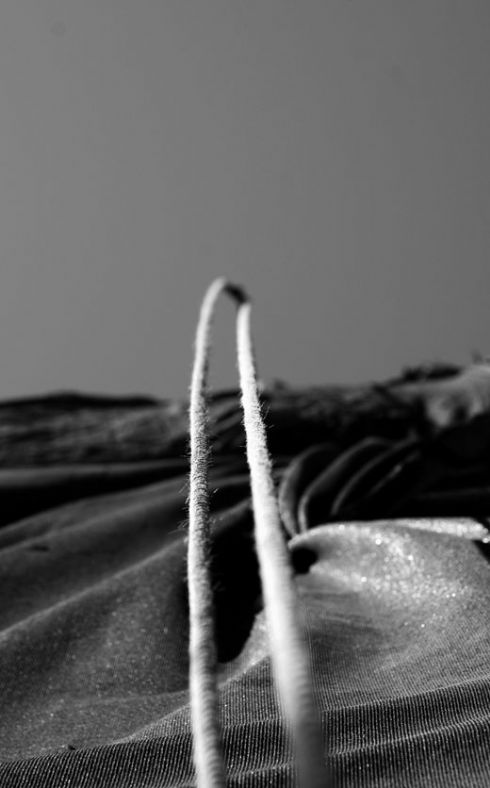
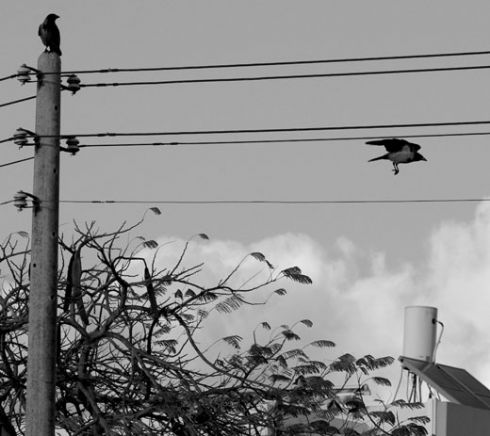
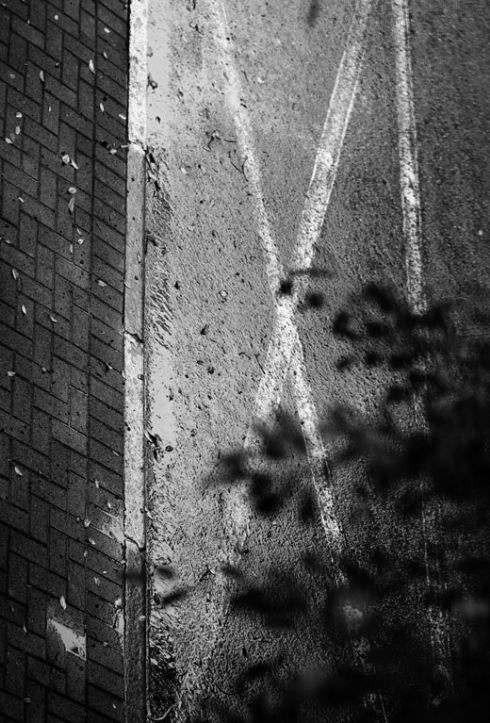
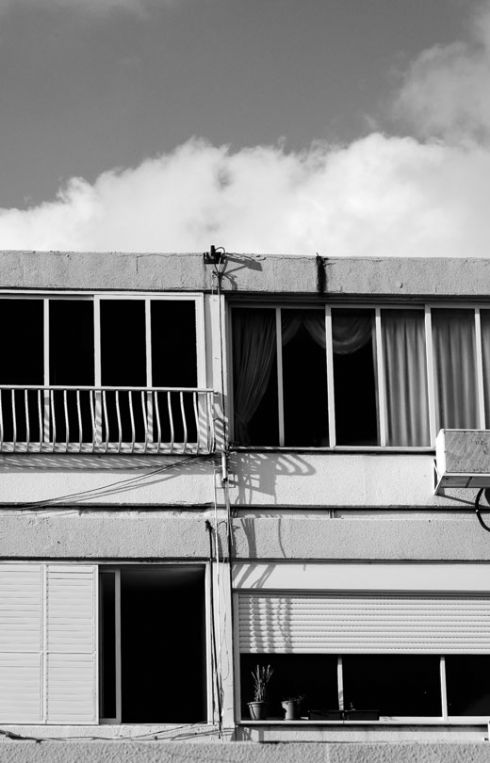
in this article the writer ponder about B&W photography and it's force in the turn of the century, choosing key photographer artists. I choose Yoram Kupermintz's photo, Kupermintz is an israeli painter and photographer.

..."I'm not suggesting that these artists are primarily undertaking a acts of re-thinking history; these are not merely descriptions of how to reinterpret the language of black-and-white photography just when the moment in photography's journey seems to be paved with color LightJet prints. Their practice offers creative, in-process solutions to the potential quagmire in photography-as-contemporary-art's current color manifestations, and also to our dislocation from the pertinence that photography's history brings to bear on our current situation.... "

"These projects are key propositions for what photography carries forward into the 21st century, as a bid for us to remember that photography is an act of making choices. This includes choices regarding methods and style of vision, which need not be defined by the fashionable, marketable production values of an era. "

"It's still proving difficult for me to find the words on the tip of my tongue for describing what exactly I recognize in the work, say, of Osamu Kanemura, what it is that I sense to be a timely departure black-and-white photography's routing. ... Maybe it is the inherent formalism of the photographs that triggers my interest here - the very idea that a contemporary art photographer has so explicitly blended pragmatics and concept, deciding that monochrome is the only way to convey a specific vision. The work deftly circumvents the accusation of arch-Modernism by carrying the energy of enduring photographic discovery into new intellectual territory."

"The contemporary black-and-white photography I've described above has moved my thinking about the present state of photography onto a much more optimistic platform. Through these contemporary manifestations, the true, maverick character of photography, of our medium's history, is far from lost. Indeed, these threads of the past are given new and meaningful effect. I am not proposing that contemporary black-and-white photographic prints represent the full embodiment of the future for photographic practice, just that the degree of self-determination that I am sensing in these photographers' work is timely. .... From Tip of the Tongue - this project (2007) 0aim is to find the words that explain emergent issues for photography.

via personism

Thursday, March 15, 2007

'The big question'

Prospect Magazine {March 2007 issue} asked 100 writers and thinkers to answer the following question: Left and right defined the 20th century. What's next? almost nobody expects the world to get better in the coming decades, and many think it will get worse. well, not suprising isn't it?

.

illustration by fudgefactorycomics

.

Pervez Hoodbhoy, scientist:

.

Global and national politics will turn simple and Hobbesian in 50-70 years. In the interim, energy hunger will drive the US and European countries to squeeze out, and steal, the last drops of oil from under Muslim sands. As bridges between Islam and the west collapse, expect global civil war and triumphant neo-Talibanic movements circling the globe. Should a few western capitals be levelled, Muslim capitals will be randomly nuked in retaliation. The old planetary order is condemned to die. But the human spirit may yet prevail, and a new and better one may emerge.

. Julian Evans, writer and critic:

The next hundred years will be a battleground between spirit and technology. The imperialist reach of technology is already global in ways that large sections of humanity, not least Islamist extremists, are hostile to. But it is not just terrorists who will be against the west’s technological and economic hegemony. Democratic citizens will voice increasing unease at an empire of innovation that dumps its products on every street and its garbage sacks in every corner of the planet. So political battle lines will be drawn between ideologies of spirit-expressed in everything from Islam and other religious faiths to eco-campaigning-and ideologies of technology, mostly in its economic formulations. One truism of the west is that we could all do with less. Somewhere in the psychological territory the two sides will be fighting for, there will be the warring instincts of those who believe we find our identity, as well as our deepest pleasure and harmony, in intimacy and relationships, with nature as much as each other, and of those who obtain their satisfactions in the desire-based, individualistic life-support systems sold to us by technology.

. Meghnad Desai, economist:

Left/right, north/south, east/west are dead. Politics will be global and/or personal. What little the state will be asked to do—mainly local issues-it will fail to do. People will devise their own solutions, however imperfectly. They will move across borders and create the preconditions of a global polity, not as a behemoth but as a beehive.

. Brian Eno, musician:

Real life vs virtual life

.

Some people will spend more and more of their time in virtual communities such as Second Life. They will claim that their communities represent the logical extension of citizen democracy. They will be ridiculed and opposed by “First Lifers,” who will insist that reality with all its complications always trumps virtual reality, but the second-lifers in turn will insist that they live in a world of their own design and therefore are by definition more creative and free. This division will deepen and intensify, and will develop from just a cultural preference into a choice about how and where people spend their lives.

.

Anthony Giddens, sociologist:

.

“The future isn’t what it used to be,” George Burns once said. And he was right. This century we are peering over a precipice, and it’s an awful long way down. We have unleashed forces into the world that it is not certain that we can control. We may have already done so much damage to the planet that by the end of the century people will live in a world ravaged by storms, with large areas flooded and others arid. But you have to add in nuclear proliferation, and new diseases that we might have inadvertently created. Space might become militarised. The emergence of mega-computers, allied to robotics, might at some point also create beings able to escape the clutches of their creators. Against that, you could say that we haven’t much clue what the future will bring, except it’s bound to be things that we haven’t even suspected. Twenty years ago, Bill Gates thought there was no future in the internet. The current century might turn out much more benign than scary. As for politics, left and right aren’t about to disappear—the metaphor is too strongly entrenched for that. My best guess about where politics will focus would be upon life itself. Life politics concerns the environment, lifestyle change, health, ageing, identity and technology. It may be a politics of survival, it may be a politics of hope, or perhaps a bit of both.

via

artsjournal

Monday, March 12, 2007

The Wisdom of Art

- Roland Barthes on Cy Twombly's art ( i deeply feel it has a wider context)

"Whatever the metamorphoses of painting, whatever the support and the frame, we are always faced with the same question: what is happening, there? Whether we deal with canvas, paper or wall, we deal with a stage where something is happening (and if, in some forms of art, the artists deliberately intends that nothing should happen, even this is an event, an adventure). So that we must take a painting (let us keep this convenient name, even if it is an old one) as a kind of traditional stage: the curtain rises, we look, we wait, we receive, we understand; and once the scene is finished and the painting removed, we remember: we are no longer what we were: as in ancient drama, we have been iniciated... " Read on

Sunday, March 11, 2007

181 Things To Do On The Moon

not very parctical, unless you woke up tomorrow morning and found yourself on the moon. what would you do? NASA has just released a list of 181 good ideas. "We consulted more than 1,000 people from businesses, academia and 13 international space agencies to come up with a master list of 181 potential lunar objectives."

Tuesday, February 13, 2007

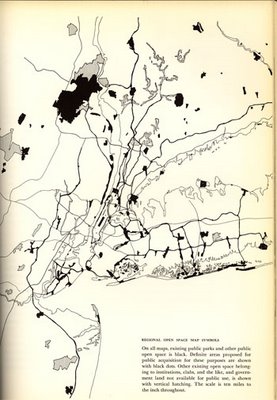
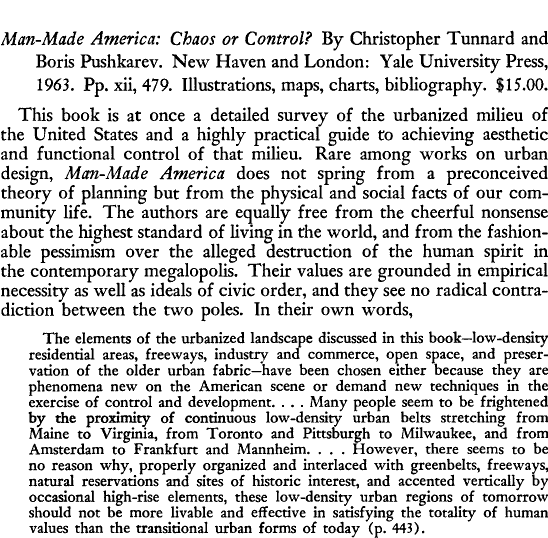
Man-Made America: Chaos or Control?

Nathan, this one is for you:

(and i wonder if you are familiar with this book)

Again mentioning books I haven't read, but would love to, one of these days...

via transfer

Man-Made America: Chaos or Control?: An Inquiry into Selected Problems of Design in the Urbanized Landscape, New Haven: Yale University Press(1963).

In It Christopher Tunnard and Boris Pushkarev argued that the built environment must be planned everywhere. Whereas the authors eschewed stylistic analysis and stressed newly emerging elements like freeways and subdivisions, they still hoped to aestheticize the landscape according to customary notions of order and beauty.

here's a review on the book:

read more book reviews about landscape

Friday, February 09, 2007

Paul Auster's cities roads and street

17 years ago, while living in Paris, being a young pregnant mother to come, while i was not wondering the endless streets and gorgeous gardens, the art galleries and museums, going down to the river -sitting on the dock -staring at the tourists boats at night time, passing under the stones carved old bridges, and lighting with their floodlights all what is around: the dark water, crating an outstanding theatrical scene of gigantic trees shadows falling on the building behind, and visionary scenery of ancient cities in the water - i was reading Paul Auster's The New York Trilogy - and was completely absorbed by it-maybe in reflected my own a quest for my own identity...the never ending one...

Naoya Hatakeyama: River Series / Shadow, 2002

In the following piece,

Markus Rheindorf looks to the roads and streets of Auster’s cities, detailing a peculiar process of urban embodiment that involves blending in or disappearing as a negotiation between the internal and external. and Richard Swope writes about City of Glass(a part of the trilogy), analyzing the relationship between the story's protagonist and the city he inhabits (or the city that inhabits him).

Vera Lutter. 155 West 66 Street, New york City, VIII : August 25, 2005 2005 Unique camera obscura, silver-gelatin print 191.6 x 127.8 cm

Wednesday, February 07, 2007

So where does painting start and photography end?

From Pedro Meyer of Zone Zero essay:

"I believe we have entered a new era where the once defined limits between photography and painting, and their respective fields of activity no longer have very meaningful boundaries."

And he is quoting Francis Bacon: "One thing which has never been really worked out is how photography has completely altered figurative painting.” It has been clear for quite some time now, however, that photography has in fact influenced painting. And yet, it remains unclear how painting has been"

read on and in pdf via lensculture

Roi Kuper. "Atlantis", first part of the: "To Eat of the Leviathan Flesh" trilogy 2007color prints 63 x 63 cm.

Monday, January 22, 2007

Extreme Geography

by David J. Nemeth (author of Absurdist Cartography: The Dada Millennium Map of the United States)

"Postmodern skepticism thrives on information surfeits, and ambiguous truths are bred wholesale by the speed in the span of cyberspace: this new flexibility in the accumulation of information now feeds a frenzy of popular skepticism about absolute truths that is much deeper and darker than the methodological skepticism in positivist science that continues to invest heavily in their credibilities."

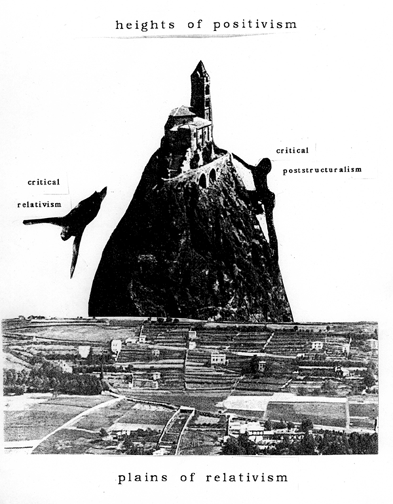
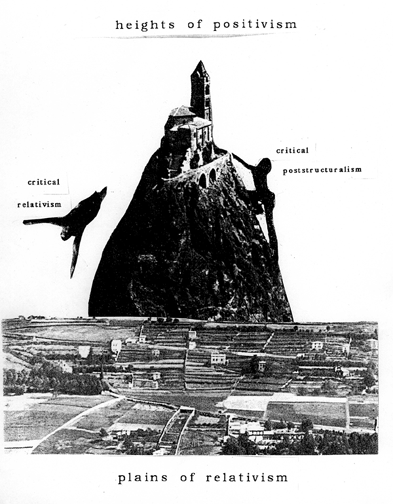
Figure 1

Figure 1 is a metaphorical device that conveys key ideas from this commentary. The mountain fortress of logical positivism is where scientific geography resides, claiming the high moral ground. The horizon of the entire surrounding epistemological landscape constitutes the normal curve, symbolizing the achievement of positivist science's hegemonic quest to universalize and generalize. From its privileged and lofty perspective, positivism presents itself to the world as the single source of scientific truth, the only reliable source of ultimate explanation and the best hope for human happiness. Positivism surveilles all the objects and relationships in a world it observes, names, knows as its unified domain, and attempts to describe in a lucid, straightforward manner. But there is more to language than lucidity. Below, and overshadowed, are the ludic slopes and plains of relativism, where dwell the contextualized, the situated, the localized, and the marginalized truths. Upon these playing fields there are no rules and nothing is alien to geographical investigation from the nomadic perspective of critical relativism. There is no obligation to work, only a desire to experience. The critical poststructuralist position is depicted as exploratory, yet it clings to the same towering outcrop of enlightenment bedrock that secures the positivist position. Critical poststructuralism is a tentative intellectual purchase, or temporary stabilization, between the heights of positivism and the plains of relativism. Its tethered position is no extreme departure from positivist science. In contrast, the critical relativist departure from the positivist stronghold is a flamboyant free fall that invites risky and uncertain exploratory experiences, and perhaps grave outcomes.

"I envision extreme geographers acting on impulse to merge with contemporary youth culture's amorality and indifference, by delving into the mysteries that incite it. To do so merges epistemology with attitude, whereupon moral pluralism becomes unmasked as moral relativism. "

read it

Sunday, January 21, 2007

The geography of thought

From a mindful critic by Julian Jonker about the book, Rhythm Science by Paul D. Miller, Cambridge: The MIT Press, 2004

"I live in a place where the progress of time is distributed as a fractal. It's complex, really. Or, as they say in mathematics, it's irreal, outside the cartesian geography of the real. Poses aside, there's no hope of keeping it real in this windswept city by the sea...The rhythm of this city measures the weight of the past rather than the lightness of the digital now, the unburdened flow of the current...You must understand, my city is a port city. It exists not as a place with roots in the soft earth of a continent, but as a point drifting along the routes that span oceans: oceans of sound, borrowing notes and rhythms from the trade winds."

"In four dimensions, this city is not a port, nor a point, but a vector: that which Miller describes as a "relation between a determinate and an indeterminate property". The vector, which has fixed dimensions but no fixed position, is the idea which can be recalled into any position in the geography of thought. The vector is the technology that transforms graffiti into wildstyle, that typographical art... . Rhythm Science is a vector: a DJ tool, ready to be played. In this manner too, the city drifts in the mists of time and histories, waiting to be activated. It is without stated intentions, a city at play. Press play, and let the flow of histories coagulate into a mix. ."

"This is a world where all meaning has been untethered from the ground of its origins", says Miller, "and all signposts point to a road that you make up as you travel through the text." Identity is skinnable, like a winamp player: download the source. "Identity," says Miller, "is about creating an environment where you can make the world act as your own reflection."

"...Long ago, genocide replaced genealogy. Forgetting drifts along the trade routes. We track the silences, looking for patterns. We call this rhythm, and use it to count time. "

Saturday, January 20, 2007

Happiness is a place to visit

"Scientists have theorized that evolutionary outcomes of natural selection have given us our attraction to beauty. But when they investigated if beautiful people are happier than their counterparts, the surprising answer was no. As the current theory goes, we didn’t evolve for happiness; we evolved for survival and reproduction. Negative emotions like fear help us survive individually; positive emotions like joy help the community to survive.

We think we want to be happy all the time, but the fact is that an emotion, like happiness, is a primitive signaling system. They are how your brain tells you if the things you’re doing are enhancing or diminishing your chances of survival. Emotions are supposed to fluctuate. You’re not supposed to stay on “happy” during an earthquake. Happiness is a place to visit, not a place to live." via Medico Musings