Showing posts with label Psychogeography. Show all posts

Wednesday, September 29, 2010

Amsterdam RealTime: Diary in Traces

amsterdam-realtime-image

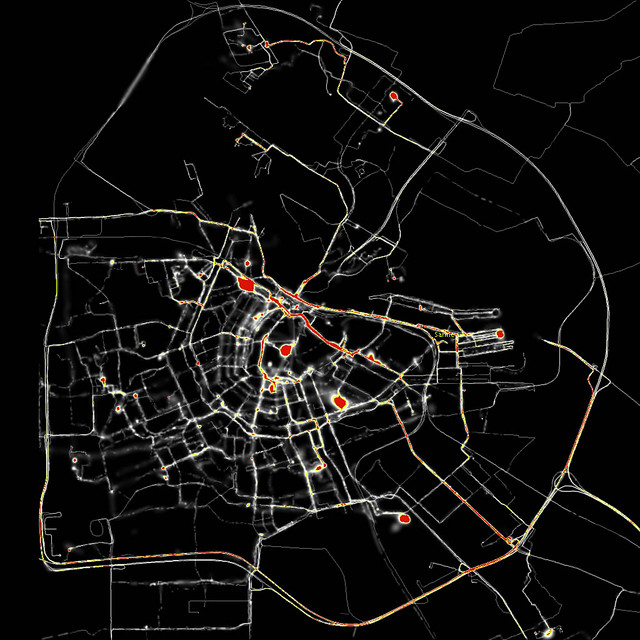
The most beautiful example of cartography in motion is Esther Polak’s “Amsterdam RealTime: Diary in Traces,” where GPS-equipped pedestrians sketch out the city plan of Amsterdam as a record of their everyday itineraries. Their paths appear as lines of light on a black ground, only to be gradually effaced, giving way to the traces of other walkers. But the work is a fragile gesture, fraught with ambiguity: the individual’s wavering life-line appears at once as testimony of human singularity in time, and proof of infallible performance by the satellite mapping system.

via

Friday, November 20, 2009

you are the city

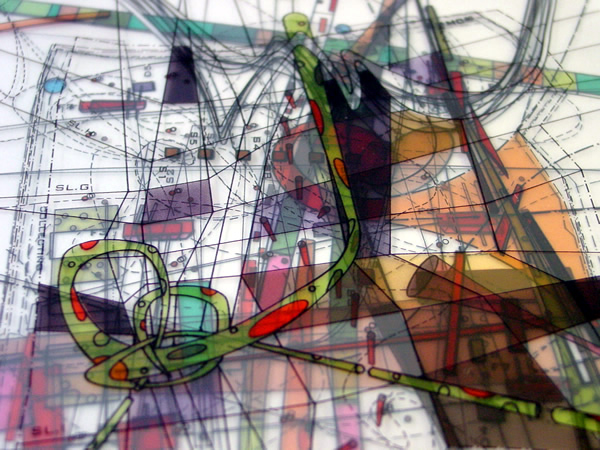
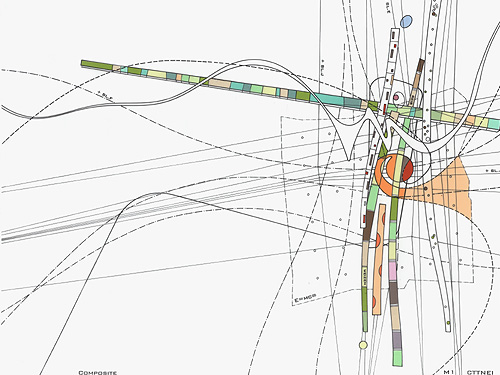
"In 'You are the City', a book by Petra Kempf's, 22 diagram drawings are split into four operational categories: Cosmological Ground; Leglisative Agencies; Currents, Flows and Forces; Nodes, Loops and Connections....By combining different sheets, and adding layers, a huge range of different compositions can be created, it invites the user to make new urban connections and realities, as different spatial arrangements and possibilities reveal themselves.

via and kosmograd

Sunday, October 11, 2009

A Brief and easy History of Urban form

(partly from notes on the Urban Development as Counterinsurgency lecture by John Duda of the Baltimore Free School)

Grids as a simple way to control the landscape – Stars as a spiky outer shell – Cracks as the fabric within the shell is compressed and densified – Networks as this dense fabric is reopened and ventilated – Flows for the density to drain further – Softness of the regulatory and fiscal pressures that continue to drive the flow – Holes open up as the fabric is vacated …

and now, the dominant formal strategy seems to be all about the infilling or refilling of those holes, along with the repurposing of the scrap left behind.

this text was taken from sevensixfive .

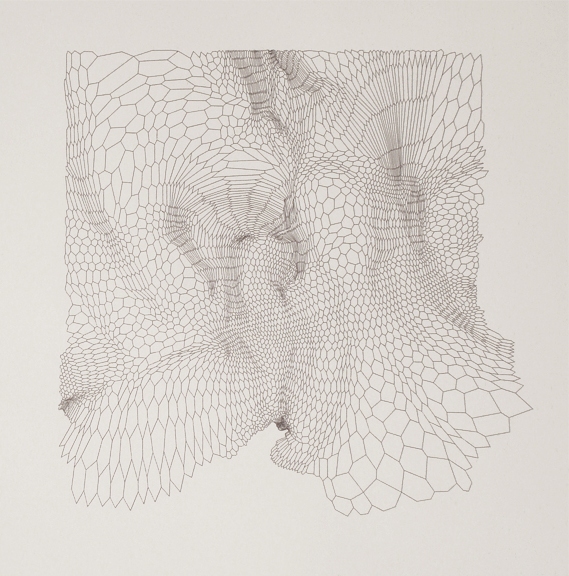
images by Matthew Daren Shlian

pen, 19 x 25 inches (each) 2008

images via interesting site but does it float

Wednesday, March 18, 2009

Daniel Peterson

Daniel Peterson is a Portland, Oregon native living in Brooklyn, New York. He likes to take photographs that communicate how he feels, though since moving to New York he has not been able to produce photographs of meaning. He, alternatively, has been making drawings that use a word or phrase that resonate with feelings or anxieties that he is experiencing. He dives into the feelings and thoughts that are associated to the words while a composition unfolds. via sublettersgallery

Thursday, March 06, 2008

How To Be Human

Jesse Pasca seeks to explore a truer picture of the internal and external landscapes that we experience every day, by examining certain qualities that he examine each day such as 'Accept Love', 'Be aware of boundaries', 'Breathe', etc

"Arab-Israeli Conflict" - jesse pasca

"... In the same way that our inner landscape can change slowly over time without our realizing it, our external landscape is being transformed...The physical manifestations of the stock markets fluctuations and the internal charting of qualities that I use to “

become more human” are landscapes to examine the "invisible" bargains we all have made that affect the paths we choose and the actual physical landscape, horizon and place we call Earth."

"Spurious Nature of Private Property" - Jesse Pasca

via 3pointd

Thursday, January 10, 2008

Always Coming Home

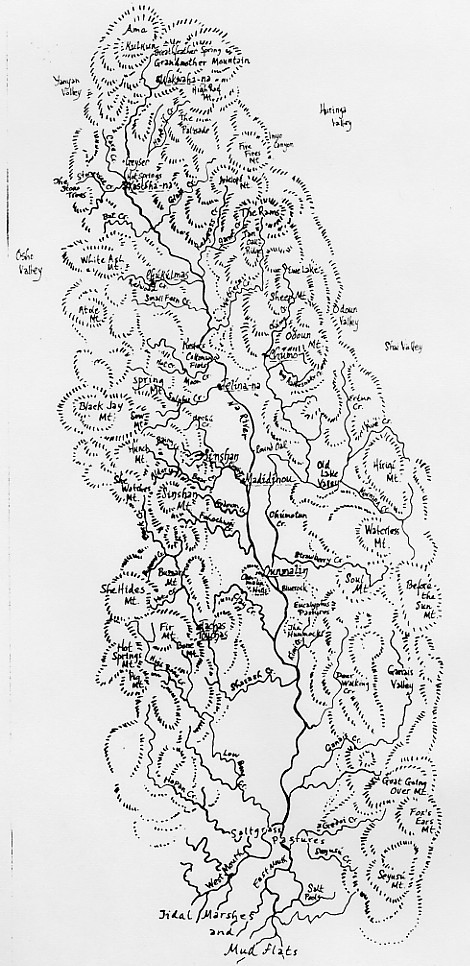
This Stone From the Serpentine heyimas of Telina-na; by Wordriver

by Ursula Le Guin. {Illustrated by Margaret Chodos-Irvine }

xxxxxxxxxxxxxxx

He went looking for a road

that doesn't lead to death.

He went looking for that road

and found it.

xxxxxxIt was a stone road.

He walked that road

that doesn't lead to death.

He walked on it awhile

before he stopped,

xxxxxhaving turned to stone.

Now he stands there on that road

that doesn't lead to death

not going anywhere.

He can't dance.

xxxxxFrom his eyes stones fall.

The rainbow people pass him

crossing that road, long-legged, light-stepping,

going from the Four Houses

to the dancing in the Five Houses.

xxxxxThey pick up his tears.

This stone is a tear

from his eye, this stone

given me on the mountain

by one who died before my birth,

this stone, this stone.

via and interconnected

Monday, December 24, 2007

Spiral Lands

Geyer's Spiral Lands is a work of photographic and textual historiography that investigates the longest struggle for social justice in North America today - the dispossession of lands from American Indians by colonization, governmentality, capitalist development, and flat out force and violence.

Andrea Geyer - Spiral Lands ( 2007) installation with fiber based photographs and text (17 frames 70 x 175cm, 2 frames 70 x 230cm), brochure with footnotes

Wednesday, August 01, 2007

Drift

Going away or should i say Drifting to a Greec Island - one of my deepest dreams, a sec before doing that, i'll post here, some findings i made during the last year, regarding mapping, Psychogeography and stories and Drifting...

@

In the spirit of Walter Benjamin, (who advised travelers to foreign cities to learn to lose their ways), drifting, in this issue of rhizomes, becomes something akin to a non-logocentric way of mapping and understanding the world.

Drifters resist traditional cartography’s abstractions and tidy analogies, inventing tactics for appreciating places as something more than literal spaces or pieces of real estate.

Go on reading

@

via

Greek Archipelago, circa 1610(Repro ID: F1946 © National Maritime Museum, London)

map via National Maritime Museum @

Island hopping is a term that has several different definitions as it is applied in various fields. Generally, the term refers to the means of crossing an ocean by a series of shorter journeys between islands, as opposed to a single journey directly across the ocean to the destination.

@

an island hopping illustrated blog. via coudal

@

“Carneteurs”, in other words authors of travel diaries, cannot exist without drawings, notes, photographs, tickets and small curiosities. Unequivocally indefinable (being part artists, illustrators, cartoonists as well as writers, poets and reporters), they have selected this unusual way to describe their expeditions.

Each year, enthusiasts get together at Clermont-Ferrand for a festival dedicated to this unusual form of “art”.

the illustration above is taken from the lovely "road book" on-line project (by 3 french guys-Piero-paintings, Arno-playing the guitar, Benji-on the paino). via bldgblog

@

THE ADVENTURE OF A POET by Italo Calvino

"THE LITTLE island had a high, rocky shoreline. On it grew the thick, low scrub, the vegetation that survives by the sea. Gulls flew in the sky. It was a small island near the coast, deserted, uncultivated: in half an hour you could circle it in a rowboat, or in a rubber dinghy like the one the approaching couple had, the man calmly paddling, the woman stretched out, taking the sun. As they came nearer, the man listened intently. "What do you hear?" she asked. "Silence," he said. "Islands have a silence you can hear." In fact, every silence consists of the network of minuscule sounds that enfolds it: the silence of the island was distinct from that of the calm sea surrounding it because it was pervaded by a vegetable rustling, the calls of birds, or a sudden whirr of wings. Down below the rock, the water, without a ripple these days, was a sharp, limpid blue, penetrated to its depths by the sun's rays. In the cliff faces the mouths of grottoes opened, and the couple in the rubber boat were going lazily to explore them." go on reading

for more calvino treasures

@

This is a diary for the travel, which starts from Edo in a rainy day in 1769, to Tohoku district. (Kano Collection)

Travels to Michinoku. Ed. Senshun Transcribed by Ryoboku. Illustration by Kazumasa Sakaguchi. Transcribed in 1796 (colored).

Sunday, July 08, 2007

Psychogeography and the dérive

One of psychogeography's principle means was the dérive. by Dr Andrew Evans

The dérive is a stroll through the city by several people who are out to understand the "psychogeographical articulation of the modern city". The strollers attempt an interpretive reading of the city, an architectural understanding. They look at the city as a special instance of repressed desires.

Long a favorite practice of the dadaists, who organized a variety of expeditions, and the surrealists, for whom the geographical form of automatism was an instructive pleasure, the dérive, or drift, was defined by the situationists as the 'technique of locomotion without a goal', in which 'one or more persons during a certain period drop their usual motives for movement and action, their relations, their work and leisure activities, and let themselves be drawn by the attractions of the terrain and the encounters they find there'. The dérive acted as something of a model for the 'playful creation' of all human relationships..to dérive was to notice the way in which certain areas, streets, or buildings resonate with states of mind, inclinations, and desires, and to seek out reasons for movement other than those for which an environment was designed. It was very much a matter of using an environment for one's own ends. Read all, via Dr Andrew Evans

Tuesday, July 03, 2007

Urban Attractors

Urban Attractors and Private Distractors is a vlog project about privacy in public space in Eastern culture. It compares the results of Dérives in Ho Chi Minh (Vietnam) and New York City. The collective address questions such as: How is a city constructed in a culture where the inhabitants have little experience of a private physical space? Do they adapt more readily to cyberspace which is both private / public simultaneously? How do Westerners reclaim their 'public space'?

Tuesday, May 29, 2007

Where Have You Been?

Jeff Stark, hosts at the Bluestockings bookstore a monthly series on travel stories. He invites three different people to talk about their experiences and show photos.

via fecalface

Wednesday, May 23, 2007

Sketch

'Once I've arrived in the area that I picked out to go to, the search begins. There are many different ways of getting around and finding places. It all depends on the people of that particular region. The simplest way is to drive around and start knocking on doors, and see what happens. In some countries this works, but also only up to a certain level; sometimes you arrive in an area where strange or bad things may have happened awhile ago. There, people will no longer let you in. And sometimes you just know that there are interesting places that you want to see, but you don't want to knock on the door. You're afraid it will be a great place to photograph but they won't let you in. In Germany (Das Bayerische Wald, where I traveled with my daughter), there were a couple of places like this; I had seen them and I was afraid to spoil the opportunity. In that case, there are several ways to get around. One of them is to ask around and see if you can find someone who knows the person living in the place in question. You try to get an introduction from this intermediary...' read on

Saturday, May 19, 2007

Narrative Map of Tokyo

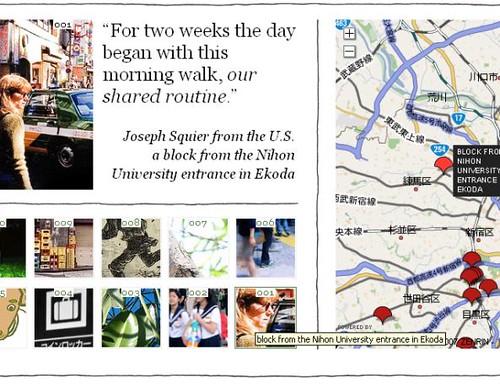
Hitotoki.org traces a narrative map of Tokyo through personal stories from curious outsiders. short narratives describing pivotal moments of elation, confusion, absurdity, love or grief - or anything in between - inseparably tied to a specific place in this sprawling city of Tokyo.

via coudal, or was it thingsmagazine?

Friday, May 18, 2007

Psychogeographic Zones of New Orleans

This material was first published in the spring of 2005, four months before hurricane Katrina devastated New Orleans and made it the center of national attention. "A major hurricane in an urban area like New Orleans brings with it a lot of attention, especially to our understanding of how cities work. As New Orleans is rebuilt, the slow forces that normally guide the evolution of an urban environment will be dramatically amplified and focused into a short period of time. But I expect that the rebuilding will follow some basic trends which were already in place prior to hurricane Katrina. " "The two most common nicknames for New Orleans are “The Crescent City” and “The Big Easy”. The Crescent City refers to the shape of the old part of the city, built along a curve in the Mississippi river. This shape has reached iconographic status in the form of a crescent moon and stars, shown on the sides of police cars and taxicabs. A more poetic version of this symbolism, showing a crescent moon emitting linear rays onto a field of stars, can be seen on the water-meter covers which dot the sidewalks all over town.

"But what about “The Big Easy”? I asked a former professor of mine, a graduate of Tulane Medical School, about the origin of this nickname. He replied: “Well, I can’t really explain it, but it just makes sense. You’ll see when you get there, things just sort of have an easy way about them.” Another old professor also lived in New Orleans in the early 1960s, and he remembers two other nicknames for the city in addition to “Crescent City” and “The Big Easy”: “The City that Care Forgot” “The City that Sin Forgot” He claims that these names could be seen on public signs around town. When he told me about these names, I was on a cell phone and I misheard the names as: “The City that Care For God” “The City that Sinned For God” "

Tuesday, May 15, 2007

San Francisco Emotion Map

Christian Nold's San Francisco Emotion Map. 98 participants walking the local area and mapping their emotional arousal in conjunction with their geographic location. via magnetbox

Monday, May 14, 2007

Hear You Are

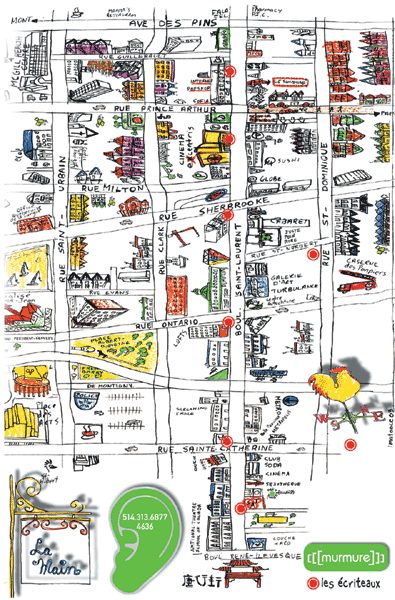
[murmur] is an archival audio project that collects and curates stories set in specific cities of Canada (Toronto locations, Montréal etc...) told by city residents themselves. (Secret NY - is a very similar project that was held in NY: large sculptural yellow arrows were placed around Manhattan. New Yorkers were invited to send audio messages from their mobile phones about the specific places where they encountered one.) I love the idea and I just adore this amusing naive maps drawings.

Toronto's spadina map.

At each of these locations, a [murmur] sign with a telephone number and location code marks where stories are available. By using a mobile phone, users are able to listen to the story of that place while engaging in the physical experience of being there. Some stories suggest that the listener walk around, following a certain path through a place, while others allow a person to wander with both their feet and their gaze.

Montréal map

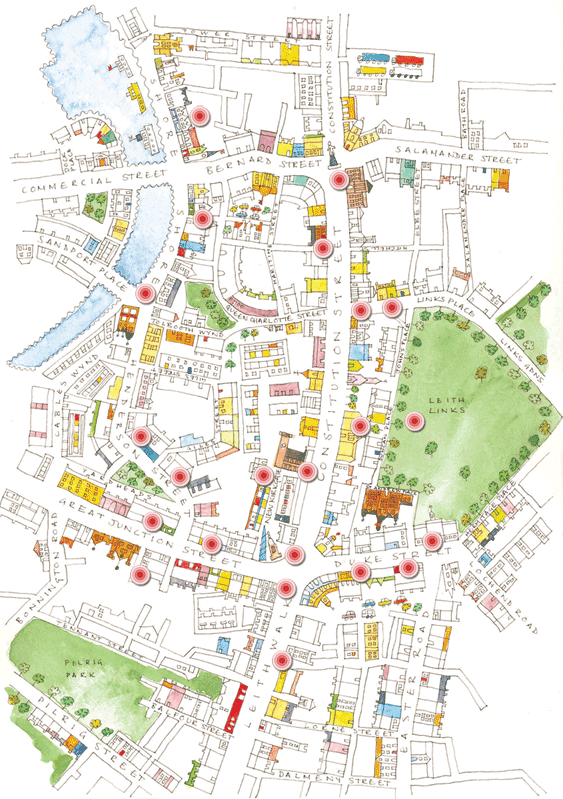
edinburgh map

Monday, April 30, 2007

A Room of his own

Will Self’s writing room is a masterpiece of organised chaos - and photographer Phil Grey has captured it in a montage of 71 photos which pan 360 degrees around the room are available on the website. xxxxxxxxxx

Thursday, April 26, 2007

"Walks"

Janet Cardiff (b. 1957) has gained international recognition for her audio and video "Walks" {which she has made in London, Florence, Pittsburgh, San Francisco, St. Louis, and elsewhere}. Visitors, while listening to a CD walkman or watching the screen of a camcorder, follow the artist’s directions through a site, become involved in the stories embedded in Cardiff’s recorded instructions and suggestions... and transforms an everyday stroll in the park into an absorbing psychological and physical experience. xxxxxxxxxxxxxxxxxxxxxxxxxxxxxxxxxxxxxx Each person receives an audio kit that contains a CD player with headphones as well as a packet of photographs. As Cardiff's voice on the audio soundtrack guides listeners through the park, they are occasionally prompted to pull out and view one of the photographs. These images link the speaker and the listener within their shared physical surroundings of Central Park.

"It is difficult to know whether the listener assumes the role of participant in this work, because you are never quite in control of where you are going and are, therefore, not necessarily participating. Instead, it feels more like Cardiff has stage-managed all of reality and the world itself has become a huge theatrical production, filled with ambient sounds and a loose narrative about a woman wishing to "get lost". Cardiff herself admits she hasn't quite figured out the precise role of the participant. Instead, she is more interested in exploring how we interact with the city and what types of thought processes take place during that function. Thus, internal dialogues--much like those we carry on inside as we walk the city--become disembodied thought patterns that stream throughout the soundtrack. Sounds taken for granted as you cross the street or as you walk past a shop become disjointed from seen reality. In this way, a car horn beeping that plays on the CD forces you to watch out for approaching traffic that never materialises as you cross the street. On the other hand, some sounds become disturbing because they do correlate with the outside world, such as a band heard playing on a street corner. The band is really there and is playing the same tune as the one heard on the headphones, which is quite prescient and disturbing. The overall sensation is surreal, schizophrenic even...The piece creates an intimate experience even though it alienates you from the world, like the Walkman did in the 80?s and the Internet does today. It also effectively replicates the way society records reality to verify its own existence and conveys one of the pleasures of living in a big city: the ability to remain anonymous." Read more

Friday, April 20, 2007

Voyage around my room

some suggestions for voyaging differently

reading at the moment a funny little book, 'Voyage around my Room' by Xavier de Maistre in Hebrew (The French text of Voyage autour de ma chambre

is available online ).

In 1790 Xavier de Maistre was punished for having gotten into a duel by being put under house arrest for forty-two days. De Maistre took advantage of his sequestration, finding within his own four walls a wealth of material to dwell on. His short book, Voyage around my Room, recounts his expeditions during that time. It is a travel book like no other.

x

Which reminded me the book, À Rebours (translated into English as Against the Grain or Against Nature)by french novelist Joris-Karl Huysmans. The book tell the story of Des Esseintes- the last member of a powerful and noble family. He decides to leave Paris where he had lived an extremely decadent life which has left him disgusted with human society. And he absconds to a small house in the countryside in solitude.

He fills the house with his eclectic art collection. And decides to spend the rest of his life in intellectual and aesthetic contemplation. He indulge himself in intellectual experiments, and see his life only worth while by living an hyperaesthetic experience of the world.

on almost cloistral methods, to soothe his fantasy and to gratify his complex aesthetic sensations, his love of reading and contemplation. The finest pictures of Gustave Moreau hang on the walls, with the fantastic engravings of Luyken, and the strange visions of Odilon Redon. He has a tortoise curiously inlaid with precious stones; he delights in all those exotic plants which reveal Nature's most unnatural freaks; he is a sensitive amateur of perfumes, and considers that the pleasures of smell are equal to those of sight or sound; he possesses a row of little barrels of liqueurs so arranged that he can blend in infinite variety the contents of this instrument, his "mouth-organ" he calls it, and produce harmonies which seem to him comparable to those yielded by a musical orchestra.

In one of the book's more comic episodes, he spontaneously decides to visit London. When he reaches the train station, he overhears some English visitors, whom he finds disgusting. Feeling that he now knows what London would be like, he immediately returns home. x

also found

aleksandra domanovic video, aleksandra is humming while mapping her home in this video

Sunday, April 08, 2007

hopeless romantic map

in 2006 15,000 user created maps were made on Platial-the people atlas site. Topics range from world history to local food.

some of the Platial 2006 Map Awards are here:

hopeless romantic map by Paiges This is an open map, any Platial user can add Places!

"Lost love. Missed chances. Unrequited love. Never meant to last. Doomed from the start. Wishing I had the nerve. Still thinking of you. Never forget you. I left this for you. I want you to know. My Heart still aches for you. I thought it mattered."

and a new expression Mapumentary: a user called Baostar has created 37 maps. Each map brings the reader closer into the world as Baostar sees it. Each one uses place and map to share an insight about a specific facet of life. He documents place in a way that embodies neogeography, where human perspective and social interaction supercede latitude and longitude. Baostar has created a new genre which has inspired us all, that of Mapumentary.

via platial